Can Smart Crosswalk Technology Reduce Pedestrian Accidents?
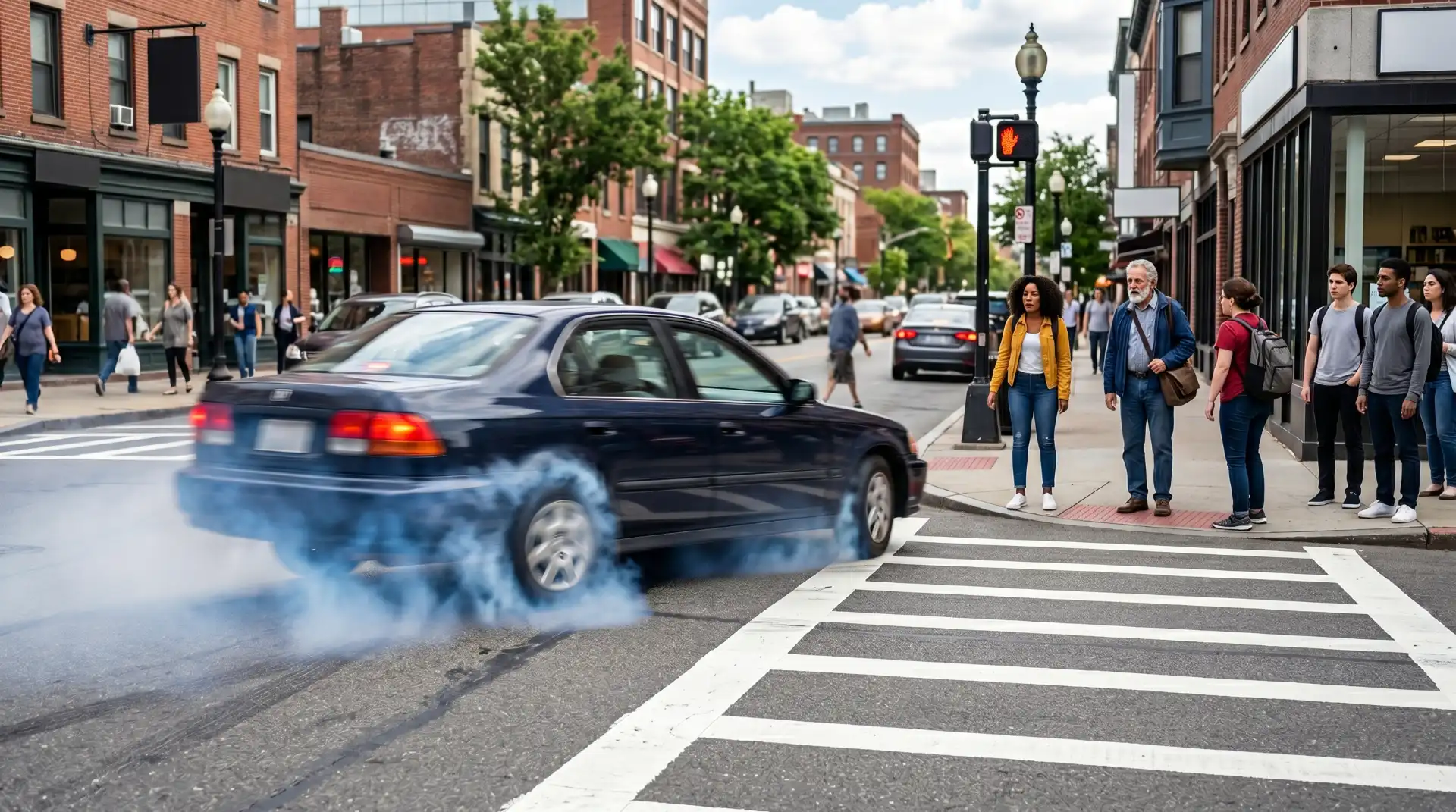
Smart crosswalk technology may help reduce pedestrian accidents by making people more visible, warning approaching drivers, and giving road users clearer information about when someone is crossing. Systems such as pedestrian-activated flashing beacons, automated detection sensors, enhanced lighting, and connected traffic signals are becoming increasingly relevant as U.S. communities look for practical ways to improve pedestrian safety.
A painted crosswalk provides drivers with a designated place to expect pedestrians, but paint alone cannot control vehicle speed or guarantee that a driver notices someone entering the road. Smart crosswalks add an active layer of technology designed to attract attention at the moment pedestrians need it most.
This approach reflects a broader shift in American transportation planning. Instead of relying entirely on pedestrians and drivers to avoid mistakes, communities increasingly consider roadway design, visibility, vehicle speed, and technology together.
What Is Smart Crosswalk Technology?
Smart crosswalk technology is a broad term for electronic systems designed to detect pedestrians, communicate their presence to drivers, improve visibility, or manage traffic movements around a crossing.
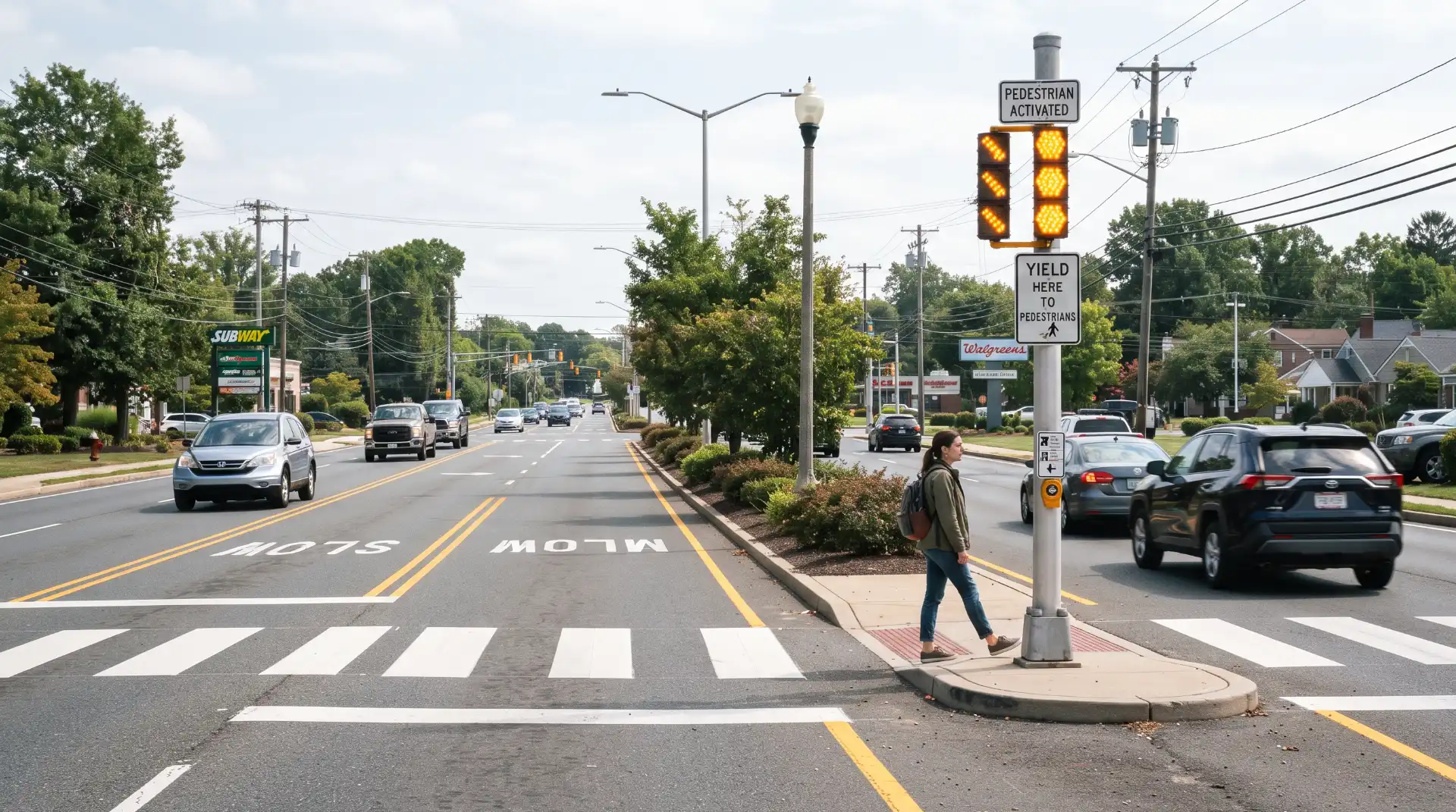
Unlike a conventional crosswalk consisting mainly of pavement markings and signs, a smart crossing can respond to activity in real time. A pedestrian might press a button before crossing, for example, causing bright warning lights to flash. Other systems can detect pedestrians automatically through cameras, radar, infrared sensors, or similar technology.
Some installations combine several tools. A crossing might include enhanced LED lighting, pedestrian sensors, flashing beacons, accessible signals, and traffic monitoring equipment. More advanced systems may eventually communicate with connected vehicles as transportation technology develops.
The goal is straightforward. The crossing attempts to provide drivers with additional warning that a pedestrian is entering or preparing to enter their path.
Why Conventional Crosswalks May Not Always Be Enough
Traditional crosswalk markings remain an important part of pedestrian infrastructure, but visibility can vary significantly from one location to another.
A crossing on a quiet residential street presents different challenges from one across a wide commercial roadway. Multiple travel lanes, higher vehicle speeds, parked vehicles, poor lighting, curves, visual distractions, and long crossing distances can make it harder for drivers and pedestrians to see one another.
Drivers may also fail to anticipate pedestrians at uncontrolled crossings. A person might legally begin crossing while an approaching motorist fails to recognize the situation early enough to slow down.
These problems can become more serious after dark. Rain, headlight glare, shadows, roadside signs, and other visual conditions can further reduce the time available for a driver to recognize a pedestrian.
Smart crosswalk technology attempts to address this visibility gap by making the crossing more noticeable while it is actually being used.
Rectangular Rapid Flashing Beacons
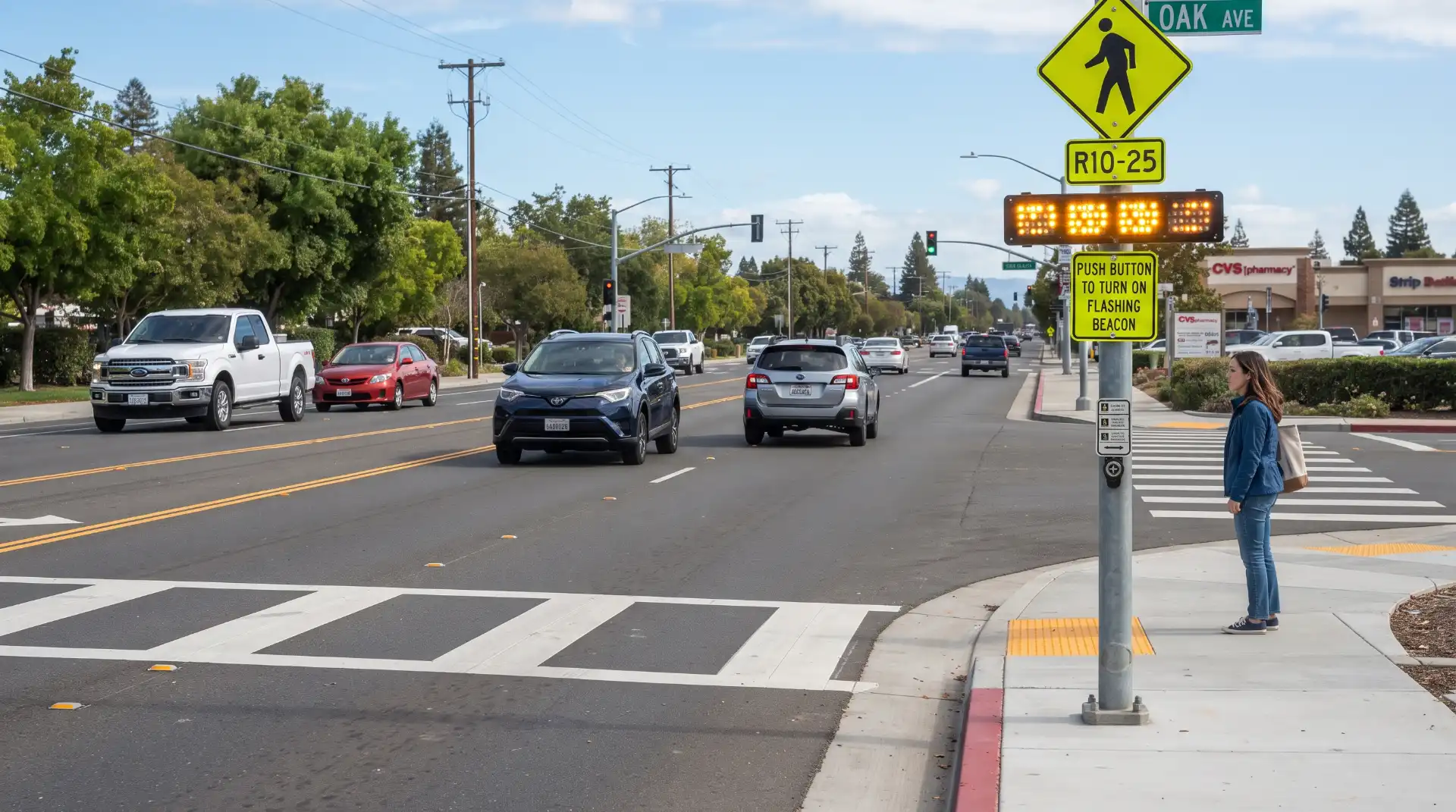
One of the most established examples of smart pedestrian crossing technology in the United States is the Rectangular Rapid Flashing Beacon, commonly called an RRFB.
RRFBs usually consist of bright yellow rectangular lights installed with pedestrian crossing signs. When a pedestrian activates the system, the lights flash rapidly to attract the attention of approaching drivers.
The Federal Highway Administration identifies RRFBs as a pedestrian safety countermeasure for certain marked crossings. FHWA guidance explains that the devices can significantly increase pedestrian conspicuity and driver awareness at uncontrolled crossings.
FHWA research has also documented increased driver yielding at locations where these devices are used. Effectiveness can vary based on roadway width, speed limits, traffic volumes, crossing distances, and other site characteristics.
This distinction matters because smart technology is not a universal solution. A treatment that performs well on one roadway may not address the same risks on another.
Automatic Pedestrian Detection
Not every smart crossing requires pedestrians to press a button.
Automatic pedestrian detection systems can identify a person approaching or entering a crossing. Depending on the installation, the system may use video cameras, infrared sensors, radar, thermal imaging, or other detection methods.
After detecting a pedestrian, the system can activate flashing warning lights or communicate with a traffic signal.
Automatic detection may be useful when pedestrians forget to activate a manual button or have difficulty reaching one. It can also help make the crossing respond more naturally to actual pedestrian movement.
Detection technology still has limitations. Equipment must distinguish pedestrians from vehicles, bicycles, animals, shadows, and other objects. Weather, dirt, blocked sensors, unusual movements, or maintenance problems may affect performance.
For this reason, smart detection should generally function as part of a broader roadway safety design rather than as the only protection at a crossing.
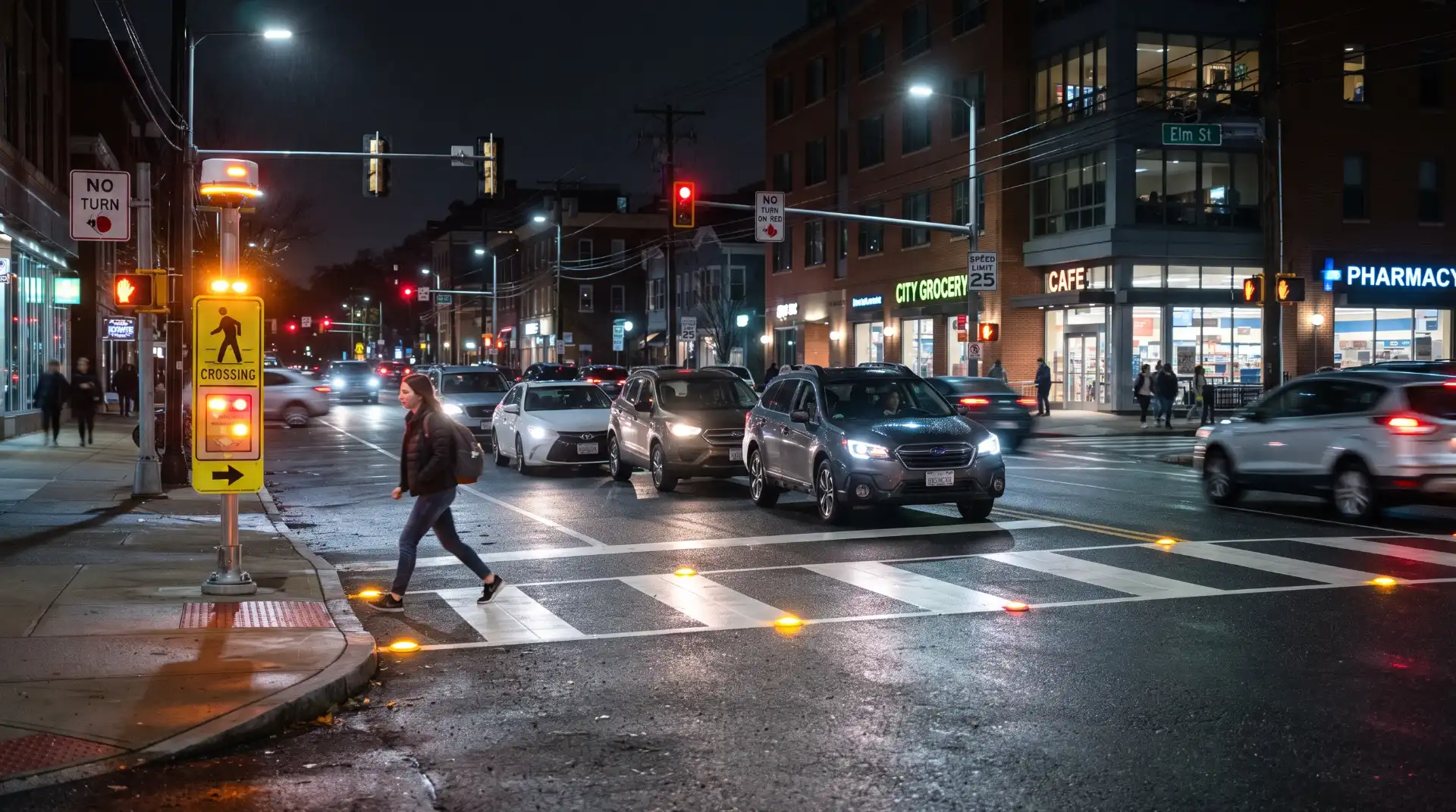
Smart Crosswalk Lighting Can Improve Visibility
Lighting is another important part of modern crosswalk design.
Some smart crossings use embedded pavement lights or illuminated signs that activate when pedestrians enter the crossing. Others use overhead or roadside lighting designed to illuminate pedestrians rather than merely lighting the roadway.
This can be especially relevant during nighttime hours.
A driver traveling toward an intersection must recognize the presence of a pedestrian, determine whether the person is entering the road, estimate distance, and respond appropriately. Better illumination can give drivers clearer visual information earlier.
Lighting also benefits pedestrians by making vehicles, lane boundaries, curbs, medians, and other roadway features easier to identify.
However, brighter lighting alone cannot eliminate speeding, distraction, impairment, or other driver behaviors associated with pedestrian accidents.
Can Smart Crosswalks Reduce Driver Speed?
Some smart crossing treatments can influence driver behavior by giving motorists a stronger visual reason to slow down.
A flashing beacon signals that someone may be actively using the crossing. Drivers who might otherwise overlook a static sign may respond differently when bright lights begin flashing as they approach.
Speed remains critical because stopping distance increases as vehicle speed rises. Higher speeds also give drivers less time to interpret unexpected situations.
This makes crosswalk technology particularly useful when paired with other measures that address speed. These might include narrower lanes, raised crossings, curb extensions, pedestrian refuge islands, speed management strategies, and improved intersection geometry.
Readers can also learn more about the connection between vehicle speed and pedestrian safety in our article on pedestrian accidents caused by speeding drivers.
Smart Crosswalks and Multilane Roads
Wide roads can create particularly difficult pedestrian crossing conditions.
A pedestrian may need to cross several traffic lanes while monitoring vehicles approaching from multiple directions. At the same time, drivers in one lane may not see a pedestrian because another vehicle blocks their view.
A common concern is the multiple-threat situation. One driver stops for a pedestrian, but another driver approaching in the adjacent lane does not recognize why the first vehicle stopped and continues through the crossing.
Flashing beacons and enhanced crossing signs can give drivers additional information before they reach the pedestrian.
Pedestrian refuge islands can provide another layer of protection by allowing someone to cross the roadway in stages instead of completing the entire distance at once.
Combining technology with physical roadway design often provides a more comprehensive approach than relying on either strategy alone.
Could Smart Crosswalks Help Older Pedestrians?
Smart crossings may also improve accessibility for people who need more time or additional information while crossing.
Older adults, people with mobility limitations, children, and pedestrians with disabilities may face different challenges when navigating traffic.
Some modern signals can detect pedestrians still within a crossing and adjust crossing intervals. Accessible pedestrian signals can provide audible or tactile information to people with visual disabilities.
Automatic detection also reduces reliance on reaching and pressing a conventional push button.
Technology should still be designed carefully. Interfaces that are confusing, inconsistent, poorly maintained, or difficult to understand can reduce their usefulness.
What About Distracted Drivers?
One of the challenges facing any crosswalk system is driver distraction.
A driver looking at a phone, navigation screen, passenger, or activity outside the vehicle may fail to notice conventional signs and pavement markings.
Bright flashing lights can increase the visual prominence of a crossing, but they cannot force a distracted driver to look at the road.
This is why smart crosswalks should not be viewed as substitutes for attentive driving.
Our discussion of pedestrian accidents and distracted driving explains additional ways driver attention can affect pedestrian safety.
How Connected Vehicles Could Change Smart Crosswalks
The next stage of smart crosswalk development may extend beyond roadside lights and sensors.
Connected transportation systems could allow infrastructure and vehicles to exchange information. A pedestrian detection system might identify someone entering a crosswalk and transmit a warning to an approaching connected vehicle.
The vehicle could then display an alert to the driver. Future systems might also interact with advanced driver assistance technology under certain conditions.
This creates the possibility of detecting hazards that a driver cannot immediately see. A pedestrian hidden behind a parked truck, for example, could potentially be detected by infrastructure before becoming visible from the driver’s seat.
These systems remain dependent on technology compatibility, communication standards, accurate detection, cybersecurity, maintenance, and widespread adoption.
Connected infrastructure therefore represents an evolving tool rather than a replacement for conventional pedestrian safety practices.
Vehicle Size Can Still Affect Pedestrian Visibility
Smart crosswalk technology also intersects with changes in the American vehicle fleet.
SUVs and pickup trucks can create larger areas around a vehicle that are difficult for drivers to see directly. Their dimensions may become particularly relevant near intersections, parking lots, driveways, and crossings.
A smart crossing can alert a driver to pedestrian activity, but technology cannot remove every visibility limitation associated with vehicle design.
Drivers of larger vehicles still need to check carefully before turning, backing, or moving through pedestrian areas.
For additional discussion, see our article about SUVs and pickup trucks and pedestrian injury risk.
Can Smart Crosswalks Prevent Every Pedestrian Accident?
No crosswalk technology can prevent every collision.
Pedestrian accidents occur under many different circumstances. Some involve speeding. Others involve impairment, distraction, illegal turns, limited visibility, weather, road design, or failure to yield.
Technology can reduce certain risks by giving road users more information, but human behavior remains a major part of traffic safety.
Equipment can also malfunction or deteriorate. Lights may stop working. Sensors may become obstructed. Pavement markings can fade. Vegetation may block signs. Construction can change normal traffic patterns.
Regular maintenance therefore matters almost as much as installation.
A smart crossing that no longer operates as intended may give road users a different level of protection from what transportation planners originally expected.
Smart Crosswalk Technology and Pedestrian Accident Investigations
Smart infrastructure can also create new forms of evidence after a pedestrian accident.
A conventional crossing might provide investigators with pavement markings, signs, photographs, witness statements, vehicle damage, and surveillance footage.
A smart crossing may create additional information.
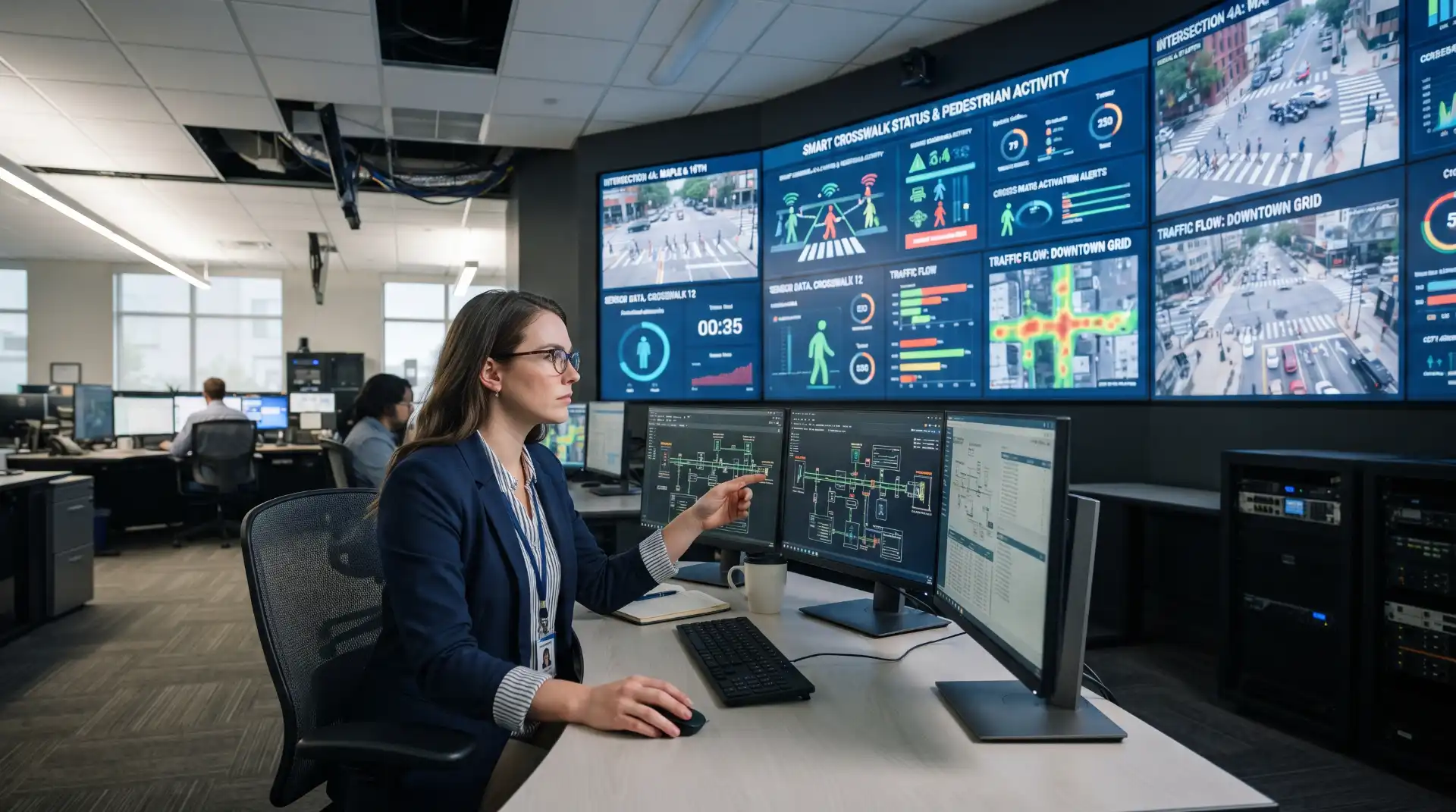
Depending on the system, records could potentially show whether the crossing was activated, when a pedestrian was detected, whether warning lights were functioning, or how traffic signals operated around the time of the crash.
Nearby traffic cameras may provide additional evidence about vehicle movement and pedestrian behavior.
Investigators may examine maintenance records as well. If a warning system was not functioning, records concerning inspections, repairs, complaints, or prior problems could become relevant.
The availability of this information depends on the system and the agency operating it. Not every smart crosswalk stores detailed historical data.
Who Could Be Responsible When a Crosswalk System Fails?
Responsibility after a pedestrian accident depends heavily on the facts and applicable state law.
The driver may remain central to an investigation if speeding, distraction, failure to yield, or another form of unsafe driving contributed to the collision.
Pedestrian conduct may also be reviewed.
In some situations, investigators might examine the design or maintenance of the crossing itself. Questions could arise concerning whether equipment was operational, whether signs were visible, or whether a known problem had been addressed.
Claims involving public roads can also involve special procedural and governmental liability rules. These requirements vary among jurisdictions.
The presence of smart technology does not automatically determine fault. Instead, it becomes one part of the larger factual investigation.
Why Road Design Still Matters
Smart technology works best when the physical environment supports safe pedestrian movement.
Consider a pedestrian crossing six lanes of fast traffic. Flashing lights may improve visibility, but the person still faces a long period of exposure to moving vehicles.
Now consider the same crossing with curb extensions, lower vehicle speeds, a pedestrian refuge island, good lighting, shorter crossing distances, and an RRFB.
The second design addresses several risks simultaneously.
This reflects the broader Safe System approach increasingly used in U.S. transportation safety. The idea recognizes that people make mistakes and seeks to design transportation environments so those mistakes are less likely to result in severe consequences.
Smart crosswalks fit naturally into this approach when agencies use them alongside appropriate roadway engineering.
Where Smart Crosswalk Technology May Be Particularly Useful
Smart crossing systems can serve many environments, but the correct treatment depends on local conditions.
Locations near schools may benefit from highly visible pedestrian warnings because children regularly cross at predictable times. Transit stops can create concentrated pedestrian activity along roads that were originally designed primarily for vehicles.
Trail crossings can also create situations where pedestrians and cyclists enter roadways away from conventional signalized intersections.
Commercial corridors, college campuses, entertainment districts, parks, hospitals, senior communities, and busy neighborhood streets may present additional opportunities for enhanced crossings.
Transportation engineers generally consider factors such as traffic speed, pedestrian volume, roadway width, crash patterns, visibility, and existing traffic controls when evaluating potential treatments.
What Pedestrians Should Know About Smart Crosswalks
Smart technology can improve visibility, but pedestrians should not assume that every approaching vehicle has detected them.
A flashing beacon means the crossing is more visible. It does not physically stop traffic.
Pedestrians should remain aware of approaching vehicles and use designated crossing areas where available. Looking across every travel lane is particularly important on multilane roads because one stopped vehicle can block the view of another approaching driver.
Electronic systems can support safer behavior, but they do not replace awareness from everyone using the road.
What Drivers Should Know
Drivers approaching a crosswalk should look beyond the traffic signal or vehicle immediately ahead.
A flashing pedestrian beacon can indicate that someone is entering or using the crossing. Motorists should reduce speed as necessary and watch for pedestrians throughout the entire crossing area.
Drivers should also avoid passing vehicles stopped near crosswalks without understanding why they stopped. A pedestrian may be hidden from view.
Extra caution may be appropriate at night, near schools, around public transit, and on roads with heavy pedestrian activity.
The Future of Smart Pedestrian Infrastructure in the United States
Crosswalk technology is likely to become increasingly connected to the broader transportation network.
Pedestrian sensors can already activate warning systems. Future infrastructure may combine these tools with connected traffic signals, vehicle communications, real-time traffic analysis, and automated safety systems.
Artificial intelligence may also improve pedestrian detection by helping systems distinguish different road users and recognize unusual movements.
However, successful deployment depends on more than adding technology.
Communities need systems that remain understandable, accessible, properly maintained, and appropriate for each roadway environment. Transportation agencies also need to consider privacy, data management, cost, reliability, and compatibility with existing infrastructure.
The most effective pedestrian safety strategy may therefore combine smart technology with proven engineering principles rather than treating technology as a standalone answer.
Can Smart Crosswalk Technology Reduce Pedestrian Accidents?
Smart crosswalk technology may reduce pedestrian accident risks by increasing visibility, alerting drivers when people are crossing, improving nighttime recognition, and providing more responsive traffic control. Technologies such as RRFBs already demonstrate how active warnings can change driver behavior at appropriate locations.
The National Highway Traffic Safety Administration continues to identify pedestrian safety as an important issue on U.S. roads. Infrastructure improvements represent one part of addressing that challenge.
Smart crosswalks are most useful when they complement lower speeds, adequate lighting, clear sightlines, accessible sidewalks, safer intersection design, attentive driving, and other pedestrian safety measures.
As sensors, connected vehicles, intelligent signals, and roadway technology evolve, crosswalks may become increasingly capable of responding to pedestrians in real time. The central goal remains unchanged: helping drivers recognize pedestrians early enough to respond safely and helping people cross American roads with less exposure to traffic hazards.