Walking is an ordinary part of everyday life in the United States. People walk to work, school, restaurants, public transportation, shopping centers, parks, and residential areas. Yet when drivers fail to yield to pedestrians, a routine trip across the street can quickly become a serious or life-changing event.
Pedestrians have considerably less physical protection than people inside motor vehicles. A person struck by a moving vehicle may be thrown onto the hood, windshield, another vehicle, or the pavement. Even at relatively moderate speeds, a pedestrian collision can result in fractures, traumatic brain injuries, spinal injuries, internal injuries, or permanent disabilities.
The National Highway Traffic Safety Administration reported that 7,080 pedestrians were killed in traffic crashes across the United States in 2024, while more than 71,000 pedestrians were injured. These figures demonstrate why pedestrian right-of-way remains an important traffic-safety and legal issue.
When a driver fails to yield, the resulting accident may create questions about negligence, comparative fault, insurance coverage, medical expenses, lost income, and potential compensation. However, pedestrian right-of-way laws are not identical throughout the United States. The specific legal rules depend on the state, roadway, traffic signals, crosswalk markings, and circumstances surrounding the accident.
Understanding how failure-to-yield situations work can help injured pedestrians recognize the evidence that may matter when pursuing an injury claim.
What Does It Mean to Fail to Yield to a Pedestrian?
Failure to yield generally occurs when a driver does not give a pedestrian the right of way required under applicable traffic laws. The exact circumstances that require a driver to yield vary among states, but pedestrian crossings, traffic signals, marked crosswalks, intersections, and turning movements are common situations in which right-of-way rules become important.
For example, a driver approaching a marked crosswalk may be required to stop or slow sufficiently to allow a pedestrian to cross safely. Similarly, a driver making a turn at an intersection may have a duty to watch for pedestrians who are crossing the roadway.
A failure to yield does not necessarily require the vehicle to strike the pedestrian. A driver who accelerates toward a pedestrian, forces the person to stop suddenly, or otherwise creates a dangerous situation may also have engaged in unsafe driving. Whether that conduct creates legal liability depends on the applicable law and the facts of the situation.
When a pedestrian is actually struck, the investigation becomes more detailed. It may be necessary to determine where the pedestrian was located, what signal was displayed, whether the driver had an unobstructed view, how fast the vehicle was traveling, and whether the driver had sufficient time to stop.
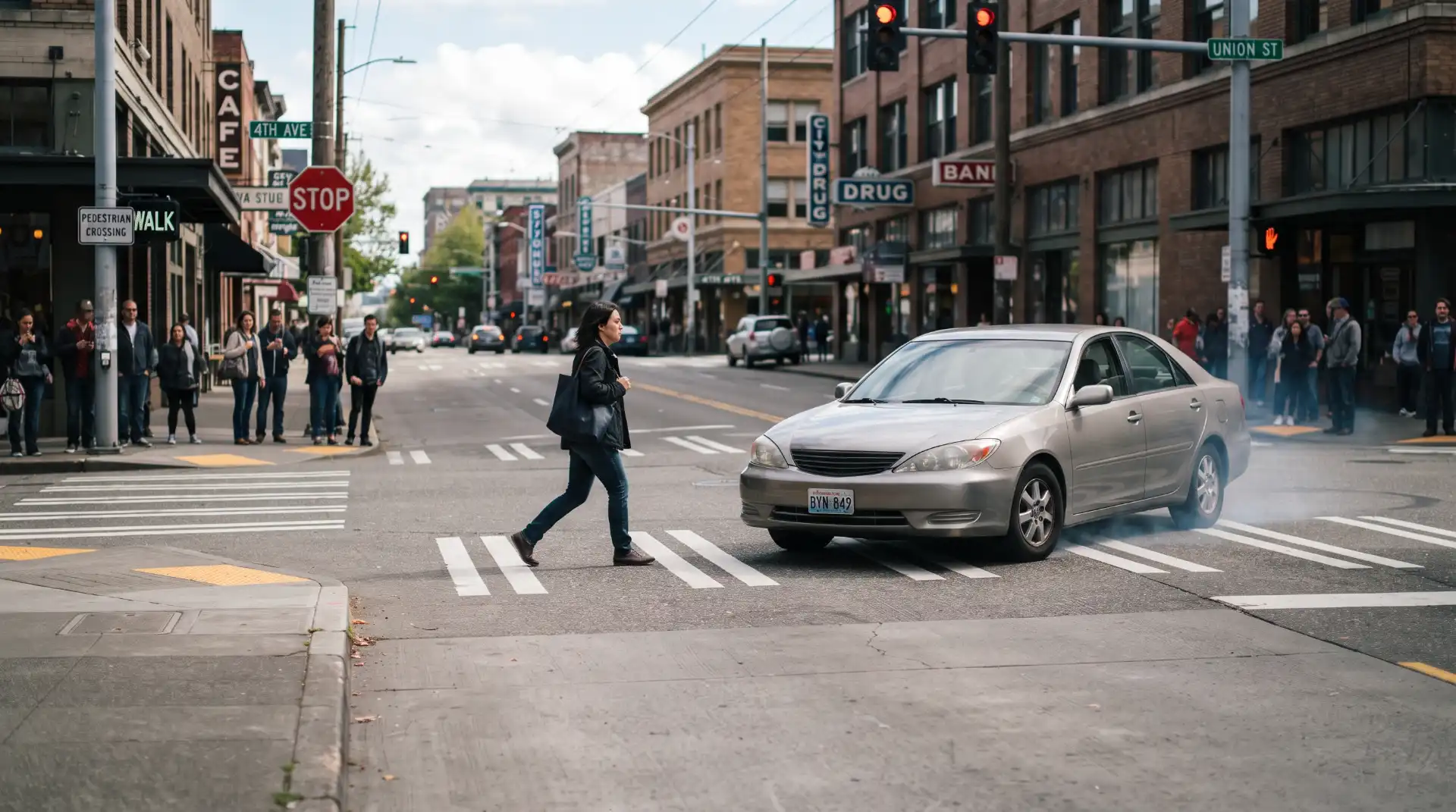
Why Pedestrian Right-of-Way Matters in U.S. Injury Claims
Right-of-way rules provide a framework for determining how motorists and pedestrians should interact. They can also become important evidence when investigators, insurance companies, attorneys, and courts evaluate responsibility for a crash.
A driver who violates a clearly applicable traffic rule may have engaged in negligent conduct. However, violating a traffic rule does not automatically guarantee that a pedestrian will win a personal injury claim. The claimant generally must still establish the elements required under the applicable state law.
In many negligence cases, the central questions include whether the driver owed a duty of care, whether the driver breached that duty, whether the breach contributed to the accident, and whether the pedestrian suffered legally compensable damages.
The pedestrian’s own conduct may also be examined. Depending on the state, allegations such as crossing outside a permitted location, disregarding a pedestrian signal, entering traffic unexpectedly, or failing to exercise reasonable care may affect the amount of compensation available.
This is why an investigation should focus on the entire sequence of events rather than assuming that either the driver or pedestrian is automatically responsible.
Common Situations Where Drivers Fail to Yield
Failure-to-yield pedestrian accidents can happen in many different environments. Intersections are particularly important because vehicles may be traveling in several directions while pedestrians cross simultaneously.
Turning Vehicles and Pedestrians
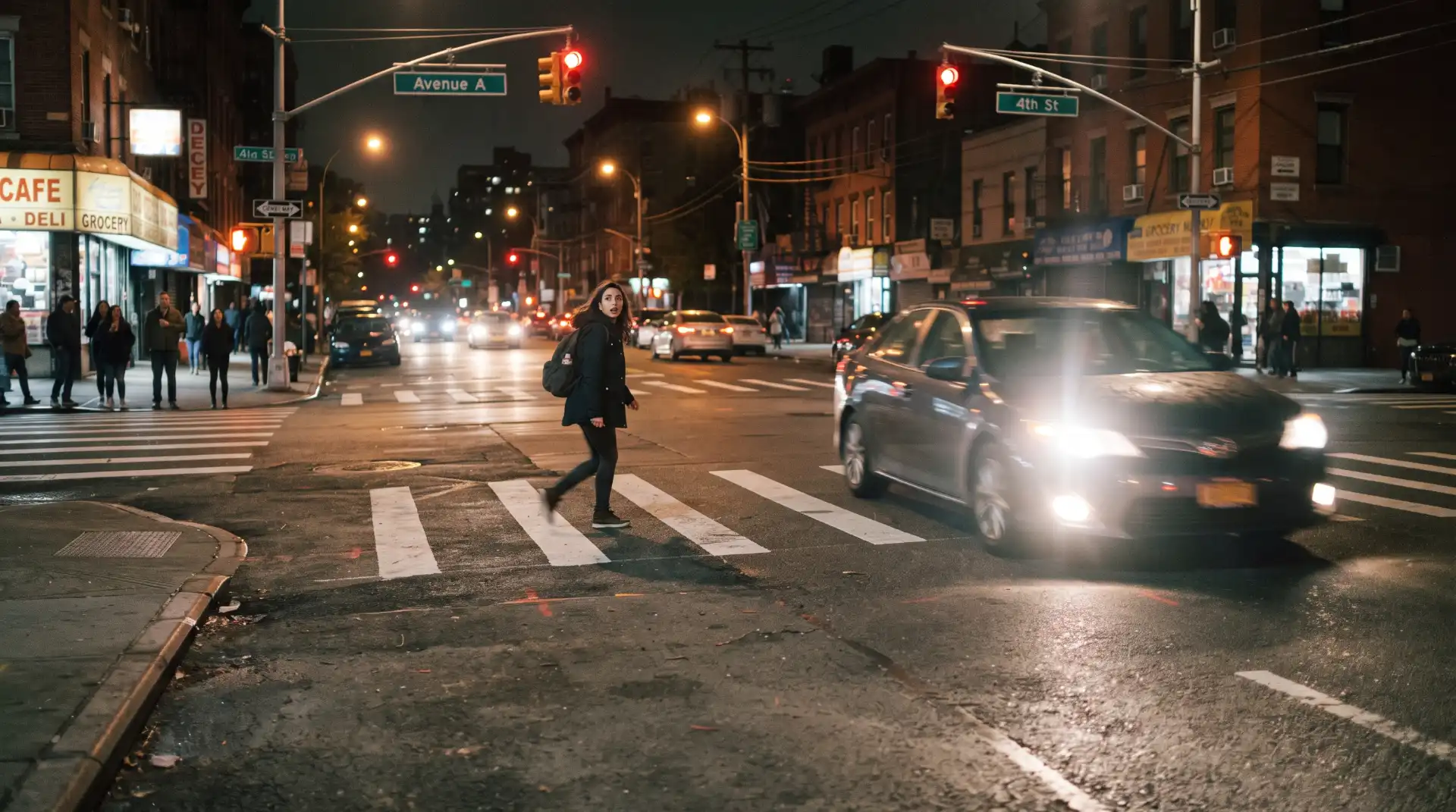
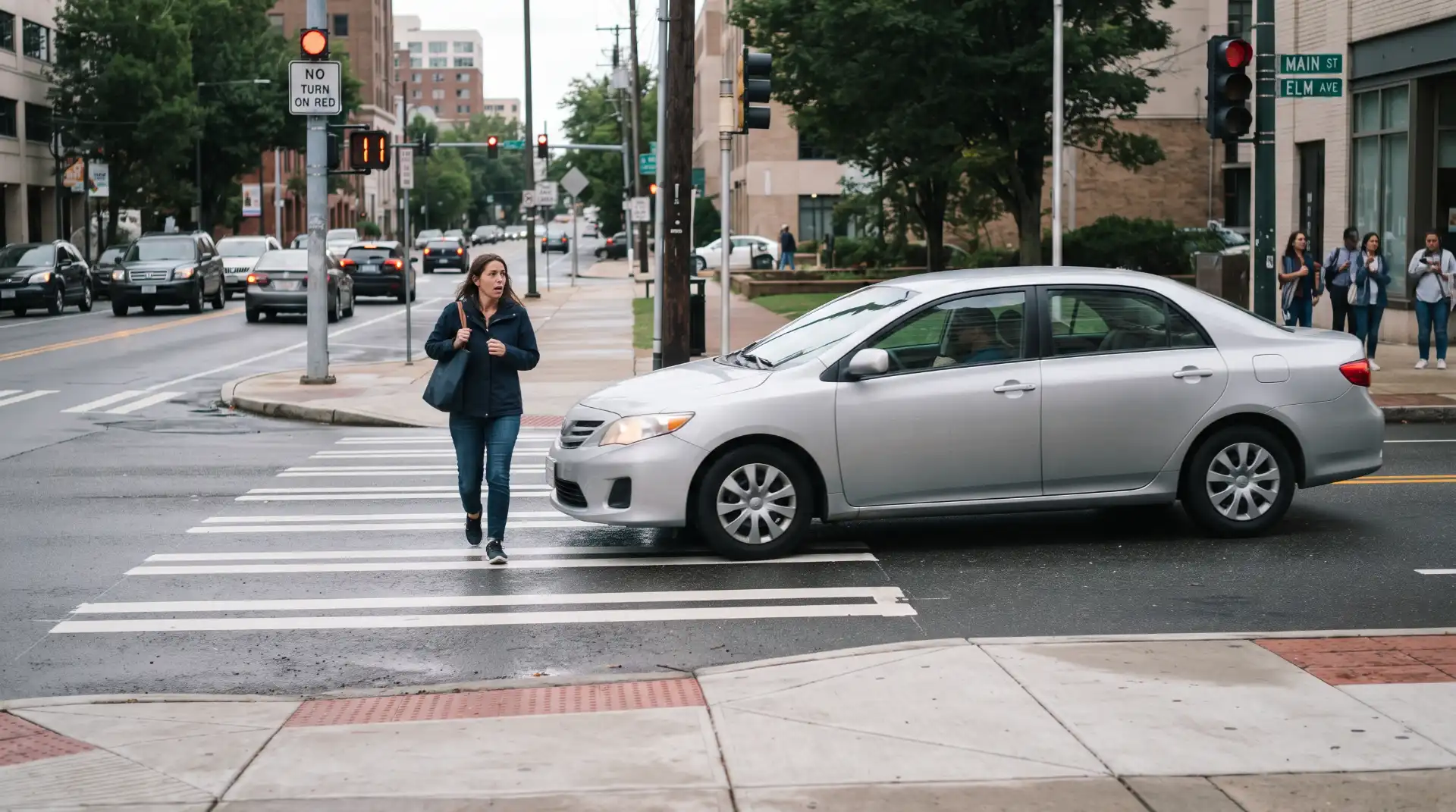
Turning vehicles create frequent opportunities for pedestrian and vehicle conflicts. A driver making a right turn may focus on traffic entering from the left and fail to notice a pedestrian crossing the street. A driver making a left turn may similarly concentrate on oncoming vehicles while overlooking a person in the crosswalk.
The problem can become more complicated when several lanes of traffic are involved. A pedestrian may be visible to one driver but hidden from another vehicle traveling in an adjacent lane.
Drivers should look carefully before completing a turn and should account for pedestrians who may already be entering or occupying the crossing area.
Crosswalk Violations
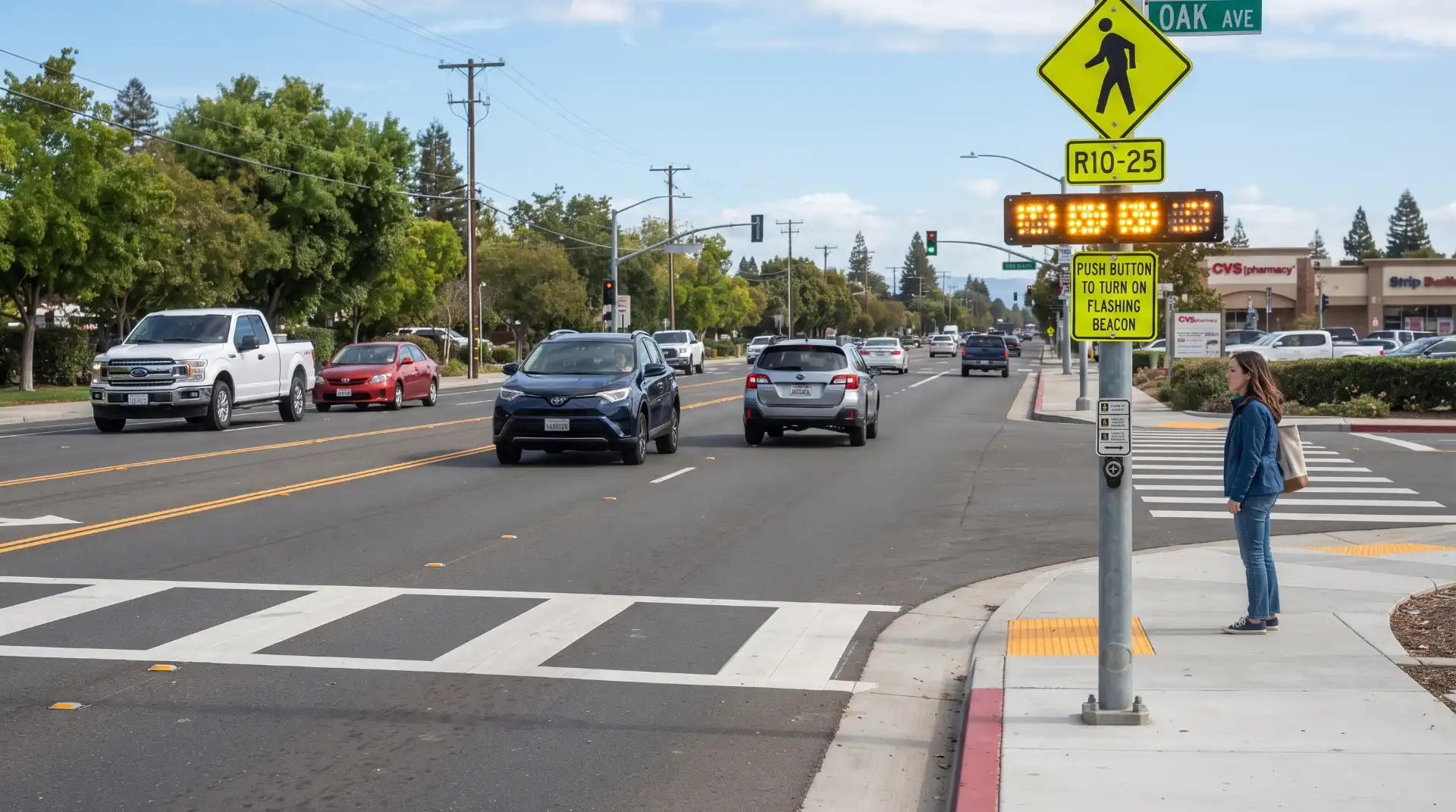
Marked crosswalks are designed to identify areas where pedestrians may cross a roadway. A driver who approaches a crosswalk must follow the applicable state traffic laws and traffic-control devices.
However, the presence or absence of painted crosswalk lines does not necessarily determine whether a pedestrian has legal protection. Many jurisdictions recognize pedestrian crossing rights at certain intersections even when the crossing is not marked.
Because state laws differ, an accident investigation should identify the precise location of the collision and determine which pedestrian-right-of-way rules applied there.
Traffic Signal Conflicts
Traffic signals can create another category of pedestrian accidents. A pedestrian may receive a walk signal while a vehicle receives a red light or a permitted turning movement.
The exact meaning of the signal configuration matters. Investigators may need to determine whether the pedestrian had a walk indication, whether the driver had a green light, whether the driver was permitted to turn, and whether any special pedestrian signal controlled the crossing.
Traffic signal timing records may become valuable evidence when the parties disagree about what happened.
Drivers Making Right Turns Must Watch for Pedestrians
Right-turn pedestrian collisions deserve particular attention because the driver may have a green traffic signal and still be required to yield to a pedestrian under applicable law.
A driver may assume that a green light means they can immediately complete a turn. However, traffic signals frequently allow vehicles and pedestrians to move through an intersection at the same time.
The driver therefore needs to check the crosswalk before proceeding. This can require looking beyond the nearest lane and checking the entire crossing area.
Large vehicles can make the problem even more difficult. A tall SUV, pickup truck, delivery vehicle, or commercial truck can create blind spots that prevent the driver from immediately seeing a pedestrian.
NHTSA has highlighted the importance of pedestrian safety and has also reported that pedestrian fatalities remain a major national roadway-safety issue.
A driver cannot necessarily avoid responsibility simply by saying that the pedestrian was difficult to see. The investigation must determine whether the pedestrian was reasonably visible and whether the driver should have detected the person before beginning or completing the turn.
How Speed Can Make a Failure-to-Yield Accident Worse
Speed can have two separate effects in pedestrian crashes. First, higher speeds can reduce the time available for a driver to recognize a pedestrian and stop. Second, higher speeds can increase the severity of injuries when a collision occurs.
A driver who is traveling too quickly may have insufficient stopping distance when approaching a crosswalk. Reaction time, perception time, braking distance, road conditions, vehicle condition, and traffic all contribute to the ability to avoid a collision.
This is one reason failure to yield and speeding can appear together in the same pedestrian accident.
Your site already covers this issue in greater detail in the article Pedestrian Accidents Caused by Speeding Drivers. That article can provide readers with additional information about how vehicle speed can affect pedestrian crashes.
The relationship between speed and pedestrian injuries is also important when evaluating damages. A higher-speed impact may produce substantially more severe injuries, leading to greater medical needs and longer recovery periods.
When a Driver Claims the Pedestrian Was at Fault
One of the most common disputes after a pedestrian accident involves competing accounts of what happened.
The driver may claim that the pedestrian crossed unexpectedly, ignored a traffic signal, stepped into the roadway outside a crosswalk, or was difficult to see. The pedestrian may remember having the right of way and entering the crossing lawfully.
These disagreements make objective evidence extremely important.
A police report can provide information about the initial investigation, but it may not contain every fact necessary to establish liability. Witness statements, traffic-camera footage, business surveillance recordings, vehicle data, photographs, physical evidence, and accident reconstruction may provide additional information.
The pedestrian should not assume that an insurance company’s initial assessment is the final word on liability. Insurance adjusters conduct investigations from the insurer’s perspective, and their conclusions can be challenged when additional evidence becomes available.
Comparative Fault Can Affect a Pedestrian Injury Claim
Many U.S. states use some form of comparative negligence or comparative fault. Under these systems, an injured person may have their compensation reduced according to their percentage of responsibility for the accident.
The exact rules vary significantly by state.
For example, one jurisdiction may allow recovery even when an injured person is found partially responsible, while another may restrict recovery once the claimant reaches a particular percentage of fault.
This makes state-specific legal analysis important.
Suppose a driver failed to yield while turning through a crosswalk, but the evidence also indicates that the pedestrian was partially distracted. The legal consequences could depend on the state’s comparative-fault rules and the specific facts.
Importantly, an allegation of pedestrian fault is not the same as a finding of pedestrian fault. Evidence must be evaluated to determine whether the pedestrian’s conduct actually contributed to the accident and, if so, to what extent.
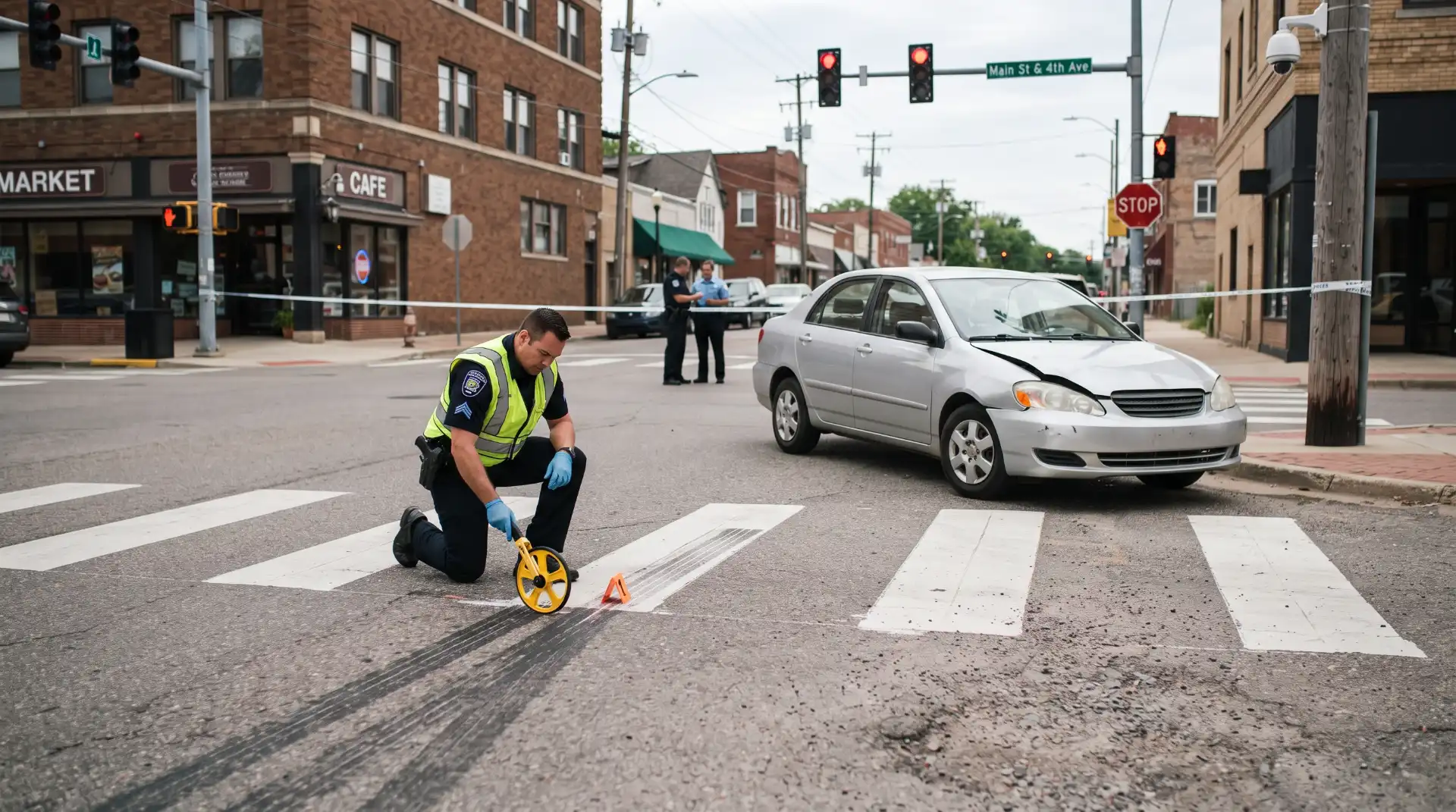
Evidence That May Help Prove Failure to Yield
Strong pedestrian accident claims often depend on evidence collected shortly after the collision.
Photographs can document the intersection, crosswalk markings, traffic signs, signal lights, vehicle position, roadway configuration, weather, visibility, and physical damage. Photographs taken from the pedestrian’s perspective and the driver’s approach can be especially useful.
Witnesses may have seen the pedestrian enter the crossing, observed the vehicle’s speed, heard the sound of braking, or witnessed the driver’s behavior immediately before impact.
Surveillance footage can be even more important. Businesses, residences, parking facilities, buses, traffic cameras, and nearby vehicles may have recorded the accident.
The problem is that surveillance systems frequently overwrite old recordings. Promptly identifying potential cameras and requesting preservation of relevant footage may therefore be critical.
Vehicle evidence may also help. Depending on the vehicle and circumstances, electronic systems may contain information about speed, braking, steering, or other events surrounding the collision.
An accident reconstruction professional may use these sources to recreate the sequence of events and determine whether the driver had enough time and distance to see and avoid the pedestrian.
Traffic Camera and Surveillance Evidence
Modern pedestrian accident investigations increasingly involve digital evidence.
Traffic cameras may show the pedestrian signal, vehicle movement, lane position, and timing of the collision. Business surveillance cameras may provide a wider view of the intersection or parking lot.
Dashcams can provide another perspective. A passing motorist may have captured the vehicle approaching the pedestrian before the collision.
Even video that does not directly show the impact can be valuable. A recording may demonstrate the driver’s speed, traffic conditions, pedestrian visibility, or the amount of time the pedestrian was present in the crossing.
Attorneys investigating a pedestrian accident may send preservation requests to businesses or other entities that possess relevant recordings. Depending on the circumstances, additional legal procedures may be necessary to obtain the footage.
Witness Statements Can Help Establish What Happened
Witnesses can provide information that is not visible in photographs.
A witness may have been standing at the opposite corner and seen the pedestrian receive a walk signal. Another witness may have been driving behind the vehicle and observed that the driver never slowed before entering the crosswalk.
Witnesses can also describe lighting conditions, traffic congestion, weather, and whether the pedestrian was visible.
However, memories can change over time. People may remember the broad sequence correctly while forgetting precise details such as the exact signal phase or vehicle speed.
For that reason, witness accounts should ideally be considered alongside physical and digital evidence rather than treated as the only proof of liability.
How Medical Records Connect the Crash to the Injury
Proving that a driver failed to yield is only one part of a pedestrian injury claim. The injured person must also establish the nature and extent of the harm caused by the accident.
Medical records can document emergency treatment, diagnostic testing, surgery, medication, physical therapy, rehabilitation, specialist care, and future treatment recommendations.
Some pedestrian injuries are immediately obvious, while others develop symptoms later. Head injuries, soft-tissue injuries, internal injuries, and psychological effects may not always be fully apparent immediately after the collision.
A consistent medical record can help establish the connection between the crash and the person’s injuries.
Your site also has an existing article covering Common Injuries in Pedestrian Accidents and How to Recover, which can be linked here naturally for readers who want more information about the medical consequences of pedestrian collisions.
Common Injuries After a Failure-to-Yield Collision
Pedestrian injuries can range from relatively minor cuts and bruises to catastrophic and permanent conditions.
Broken bones are common because pedestrians may be struck in the legs, hips, pelvis, arms, or other parts of the body. A victim may also suffer ligament damage, nerve injuries, or complex fractures requiring surgery.
Traumatic brain injuries are another major concern. The head may strike the vehicle or pavement, creating a concussion, brain bleed, skull fracture, or more serious brain injury.
Spinal injuries can affect mobility, strength, sensation, and independence. Severe spinal cord injuries may require lifelong medical care and assistance.
Internal injuries can be difficult to recognize without medical evaluation. A person who appears relatively stable immediately after an accident may still have internal bleeding or organ damage.
The financial consequences can be significant. Medical treatment may continue for months or years, while serious injuries can prevent an individual from returning to the same occupation.
What Compensation May Be Available?
The damages available in a pedestrian injury claim depend on the law of the state where the accident occurred and the specific circumstances of the case.
Economic damages may include medical bills, rehabilitation expenses, prescription costs, transportation expenses, lost wages, and reduced future earning capacity.
A person with a permanent disability may also have future expenses related to medical care, mobility equipment, home modifications, personal assistance, and ongoing therapy.
Noneconomic damages may include physical pain, emotional distress, disability, disfigurement, loss of enjoyment of life, and other effects recognized by applicable state law.
In fatal pedestrian accidents, eligible surviving family members or the estate may have rights under wrongful death or survival laws.
The amount of compensation cannot be determined solely from the fact that a driver failed to yield. The severity of the injuries, available insurance coverage, evidence of liability, comparative fault, future losses, and applicable state law all need to be considered.
When Multiple Parties May Be Involved
The driver is not necessarily the only potentially responsible party.
A vehicle owner may become relevant if the driver was operating someone else’s vehicle. An employer may potentially be responsible when an employee was driving for work, depending on the circumstances and applicable law.
Rideshare and delivery vehicles can create additional insurance and liability questions.
A property owner or business may become relevant when a dangerous property condition contributed to the collision. A government entity may potentially be involved when a roadway, signal, lighting system, or other public infrastructure condition contributed to the accident, although special rules and immunities may apply.
Determining all potentially responsible parties can be important because the injured pedestrian may otherwise overlook available insurance coverage or legally responsible entities.
Pedestrian Accidents at Intersections
Intersections deserve particular attention because they bring pedestrians and vehicles together from multiple directions.
A driver approaching an intersection may need to watch for pedestrians crossing from both sides of the road. Turning vehicles must also account for pedestrians who are crossing the street the vehicle intends to enter.
Visibility can be affected by parked vehicles, construction barriers, landscaping, signs, utility poles, large vehicles, and other obstructions.
A proper investigation should examine the intersection from multiple angles. It may reveal that a driver had a clear view of the pedestrian for several seconds before the collision.
Signal timing may also matter. If the pedestrian had a walk indication, the timing of that signal may help establish the sequence of events.
Failure to Yield in Parking Lots and Private Areas
Pedestrian right-of-way disputes are not limited to public streets.
Parking lots, shopping centers, apartment complexes, hospitals, airports, and private driveways can all produce pedestrian-vehicle collisions.
Drivers may be looking for parking spaces, backing out, navigating narrow lanes, or watching for other vehicles. Pedestrians may be walking between parked cars or across driving lanes.
Property owners and operators may have responsibilities relating to lighting, traffic patterns, signs, markings, and maintenance. Whether a property owner is legally responsible depends on the specific circumstances and state law.
A pedestrian accident in a private parking lot should therefore be investigated just as carefully as a collision on a public roadway.
What to Do After a Driver Fails to Yield
After a pedestrian collision, immediate medical attention should take priority. A person who has been struck by a vehicle should obtain appropriate medical evaluation even if the injuries initially appear minor.
If it is safe to do so, photographs should be taken of the accident scene, vehicle, crosswalk, traffic signals, road markings, surrounding area, and visible injuries.
Witness contact information should also be collected whenever possible.
The injured person should preserve relevant records, including medical documents, bills, prescriptions, work records, photographs, and communications with insurance companies.
Potential surveillance cameras should be identified quickly because recordings may not be retained indefinitely.
An injured pedestrian should also avoid guessing about facts they do not remember. If someone is unsure about the exact signal, speed, or sequence of events, it is generally better to say so rather than speculate.
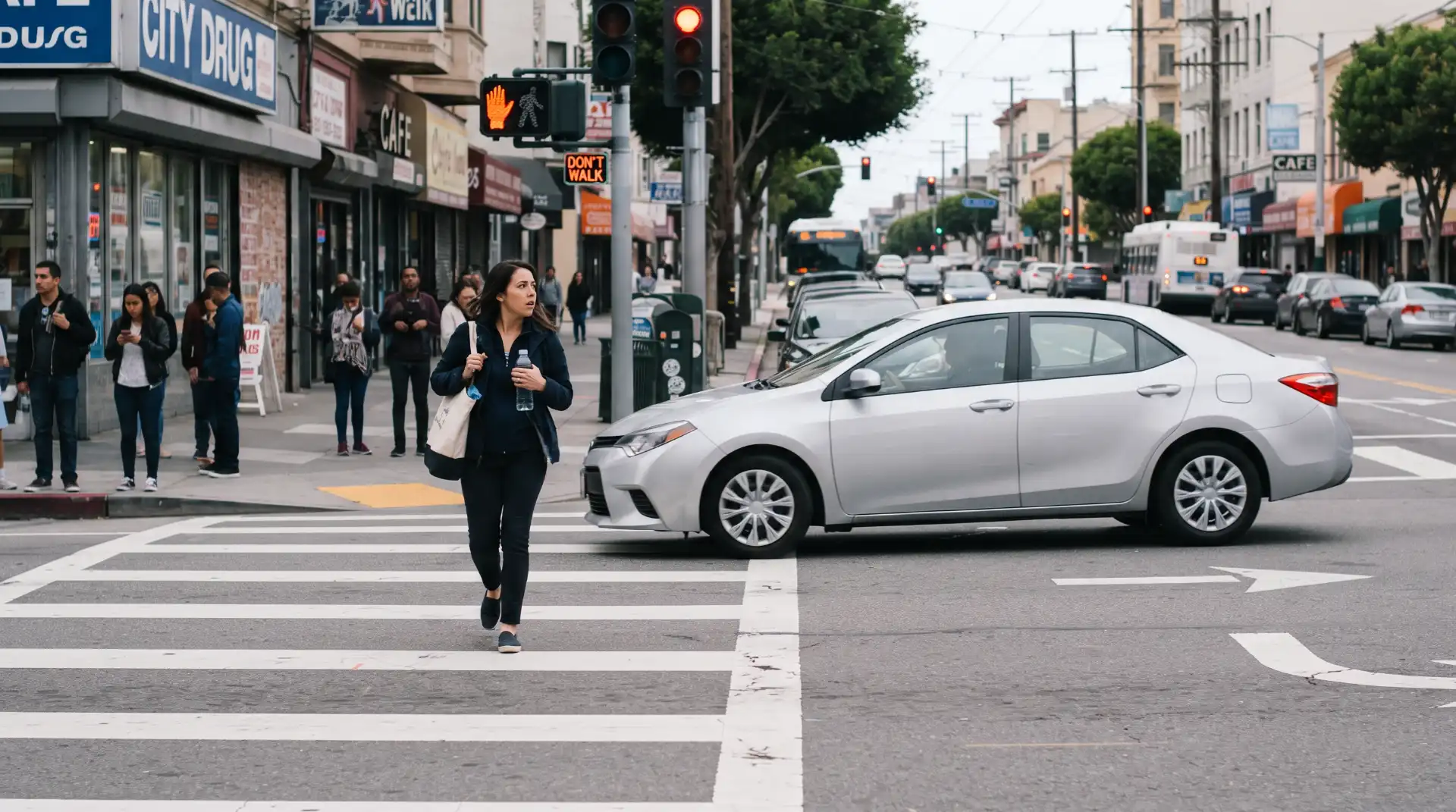
Why Prompt Legal Investigation Can Matter
Pedestrian accident evidence can disappear quickly.
A damaged vehicle may be repaired or sold. A business may overwrite surveillance footage. A traffic signal may be repaired or replaced. Road conditions may change. Witnesses may move or become difficult to locate.
Early investigation can help preserve the evidence needed to determine whether a driver failed to yield.
This can be particularly important when the driver and pedestrian have different versions of the accident.
A lawyer may also investigate insurance coverage, identify potentially responsible parties, review medical records, consult accident reconstruction specialists, and communicate with insurers on behalf of the injured person.
How a Pedestrian Accident Lawyer May Help
A pedestrian accident lawyer may begin by reviewing the accident report, medical records, photographs, witness information, insurance documents, and available video.
The lawyer may then investigate the intersection or roadway, request surveillance footage, examine traffic signal information, preserve vehicle evidence, and consult experts when necessary.
In a disputed failure-to-yield case, accident reconstruction can be particularly useful. An expert may analyze vehicle speed, braking, visibility, roadway geometry, pedestrian movement, and impact location.
Legal counsel may also evaluate comparative fault arguments. If an insurer claims the pedestrian was partly responsible, the lawyer may examine whether the available evidence actually supports that allegation.
The lawyer may also calculate damages using current medical expenses, expected future treatment, lost income, reduced earning capacity, and other losses supported by the evidence.
Not every pedestrian injury claim needs to go to trial. Some cases are resolved through negotiations or alternative dispute resolution. Others may require litigation when liability or damages remain disputed.
How Drivers Can Prevent Failure-to-Yield Crashes
Preventing pedestrian accidents requires drivers to remain attentive whenever people may be crossing the roadway.
Drivers should approach marked crossings carefully, reduce speed when necessary, look for pedestrians before turning, and avoid distractions from phones or other devices.
Extra caution is appropriate near schools, residential neighborhoods, transit stops, shopping districts, parking lots, entertainment areas, and intersections with significant pedestrian traffic.
Drivers should not assume that a pedestrian has seen the vehicle. A person may be wearing headphones, looking at a phone, dealing with limited visibility, or simply not recognize that a vehicle is approaching.
NHTSA emphasizes that roadway safety is a shared responsibility among drivers, pedestrians, bicyclists, and other road users.
Pedestrians Can Also Take Steps to Reduce Risk
Pedestrians can reduce risk by using marked crossings where available, obeying pedestrian signals, remaining alert, and watching for turning vehicles.
NHTSA recommends that pedestrians use crosswalks when available and choose locations where drivers can see them clearly.
However, pedestrian safety advice should not be confused with a legal conclusion about fault. A person who is injured while walking does not automatically lose the right to seek compensation simply because the accident occurred outside a perfect safety scenario.
The relevant question is what the law required under the circumstances and whether the conduct of each party contributed to the accident.
The Importance of State-Specific Pedestrian Laws
There is no single pedestrian right-of-way rule that operates identically in every U.S. jurisdiction.
States may differ in how they define crosswalks, when pedestrians have priority, how drivers must respond to pedestrians, and how comparative fault affects an injury claim.
Local ordinances may add additional requirements in certain cities or municipalities.
For that reason, online information should be treated as general educational material rather than a substitute for reviewing the law applicable to a specific accident.
Anyone involved in a serious pedestrian accident should consider the applicable state deadlines as well. Personal injury statutes of limitation vary, and claims involving government agencies can involve additional notice requirements.
Conclusion
Failure to yield to pedestrians is more than a traffic violation. When a driver fails to give a pedestrian the right of way and a collision occurs, the resulting injuries can create significant medical, financial, and legal consequences.
Determining liability requires more than simply asking whether the pedestrian was in a crosswalk. Investigators may need to examine traffic signals, vehicle speed, visibility, braking, driver attention, pedestrian movement, roadway design, witness accounts, surveillance footage, and other evidence.
The pedestrian’s own conduct may also be examined under the comparative-fault rules of the applicable state. An allegation that a pedestrian contributed to an accident does not automatically eliminate a claim, but it may affect the amount that can ultimately be recovered.
Prompt evidence preservation can be particularly important. Surveillance footage may disappear, vehicles may be repaired, and roadway conditions can change. Medical documentation is equally important because the severity and long-term effects of an injury can significantly influence a claim.
Pedestrian accidents remain a serious U.S. roadway-safety concern. NHTSA reports that 7,080 pedestrians died and more than 71,000 were injured in traffic crashes in 2024.
When a pedestrian is injured because a driver failed to yield, understanding the applicable right-of-way rules, preserving evidence, documenting medical consequences, and identifying all potentially responsible parties can be important steps toward understanding the available legal options.
AUTHORITATIVE EXTERNAL RESOURCE
For additional U.S. pedestrian-safety information, readers can consult the National Highway Traffic Safety Administration’s pedestrian safety resources: