Pedestrians are among the most vulnerable people using America’s roads. Unlike people inside passenger vehicles, pedestrians do not have seat belts, airbags, reinforced passenger compartments, crumple zones, or other protective systems between their bodies and a moving vehicle.
That means seemingly small differences in vehicle speed can have major consequences when a crash occurs.
A driver traveling a few miles per hour faster may reach a pedestrian more quickly, have less time to react, require more distance to stop, and deliver greater force when a collision occurs. As vehicle speed increases, the consequences of a pedestrian crash can become dramatically more serious.
Speeding is therefore not simply a traffic-law issue. It is a major roadway safety concern that can affect drivers, pedestrians, bicyclists, passengers, and other road users.
According to the National Highway Traffic Safety Administration (NHTSA), 7,080 pedestrians were killed in traffic crashes in the United States in 2024, while more than 71,000 pedestrians were injured. NHTSA also reports that speeding was involved in 29% of all traffic fatalities in 2024, with 11,288 people killed in speeding-related crashes.
These numbers demonstrate why speed management continues to be an important part of pedestrian safety throughout the United States.
For someone walking across a street, waiting at an intersection, walking along a neighborhood road, or using a crosswalk, the speed of nearby vehicles can make a critical difference.
This article explains how speeding increases pedestrian crash risks, why higher speeds can cause more severe injuries, where speeding-related pedestrian crashes commonly occur, and what injured pedestrians should understand after a collision.
Why Speed Is So Important in Pedestrian Crashes
Vehicle speed affects pedestrian safety in several interconnected ways.
The first is reaction time.
When a driver sees a pedestrian, the driver does not immediately stop the vehicle. The driver must recognize the pedestrian, understand that a collision may occur, decide to brake or steer, move the foot to the brake pedal, and then apply the brakes.
All of this takes time.
During that time, the vehicle continues moving.
The faster the vehicle is traveling, the farther it can travel before the braking process even begins. Once braking starts, the vehicle still requires additional distance to stop.
This is why a pedestrian who appears to be safely outside a vehicle’s path can suddenly become dangerously close.
NHTSA specifically warns that speeding reduces a driver’s ability to safely steer around hazards, extends stopping time, makes it harder for pedestrians and other road users to judge vehicle distance, and increases crash severity when a collision occurs.
The danger becomes particularly significant in areas where pedestrians are expected.
Crosswalks, school zones, residential neighborhoods, shopping districts, parking lots, transit stops, downtown streets, and entertainment areas can all contain large numbers of pedestrians.
Drivers who maintain excessive speeds in these environments may not have enough time to respond when someone enters their path.
Speeding Reduces the Time Drivers Have to React
Imagine a driver approaching an intersection where a pedestrian is preparing to cross.
At a lower speed, the driver has more time to identify the pedestrian and determine whether the person is entering the vehicle’s path.
At a higher speed, the same driver covers more roadway during every second of travel.
That means a pedestrian who is several car lengths away can become an immediate hazard much faster than the driver expects.
This is especially important because pedestrian movement is unpredictable.
A person might begin crossing after checking traffic. A child may suddenly run toward the street. An older adult may walk more slowly than expected. A person using a wheelchair or mobility device may require more time to cross. A pedestrian may emerge from behind a parked vehicle or another obstruction.
Drivers must be prepared for these situations.
Speed reduces the amount of time available to respond.
It also increases the likelihood that a driver will misjudge the distance between the vehicle and pedestrian.
NHTSA recommends that drivers slow down, look for pedestrians everywhere, yield to pedestrians in crosswalks, and be particularly cautious when turning or entering a crosswalk.
Higher Speeds Increase Stopping Distance
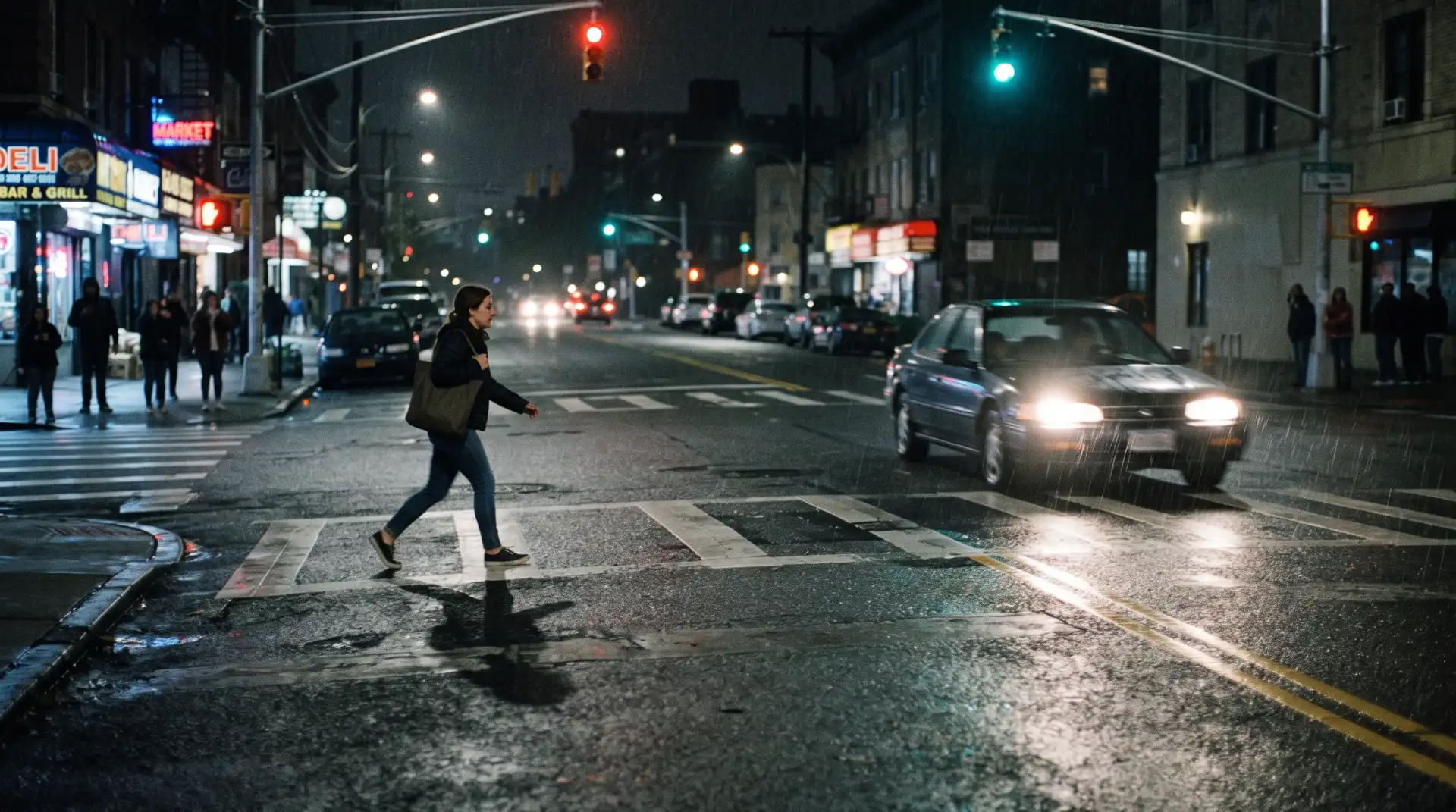
One of the most important relationships between speeding and pedestrian safety involves stopping distance.
Stopping a vehicle involves two major stages: reaction and braking.
During the reaction stage, the driver recognizes the hazard and responds.
During the braking stage, the vehicle slows down until it stops.
A speeding driver loses valuable roadway during both stages.
This means that a vehicle traveling too quickly may reach a pedestrian before the driver has enough opportunity to avoid the collision.
Stopping distance can also be affected by weather and roadway conditions.
Rain can reduce tire traction. Snow and ice can make braking substantially more difficult. Gravel, debris, construction areas, potholes, and uneven pavement can also affect vehicle control.
NHTSA explains that driving too fast for conditions can constitute speeding even when a driver is traveling at or below the posted speed limit.
For example, a speed that might be reasonable on a dry afternoon could be unsafe during heavy rain or on a poorly lit roadway at night.
The posted speed limit is not a guarantee that a particular speed is safe under every possible condition.
Higher Impact Speeds Increase the Risk of Severe Injury
Speed also matters after a collision becomes unavoidable.
When a vehicle strikes a pedestrian, the pedestrian’s body absorbs significant energy.
The person may first be struck by the front of the vehicle. They may then be thrown onto the hood or windshield before falling onto the pavement.
In some crashes, a pedestrian may also be struck by another vehicle after the initial collision.
As impact speed increases, the forces involved can become substantially greater.
NHTSA’s research on pedestrian safety states that higher impact speeds are associated with increased risks of pedestrian injury and death, with the risk beginning to rise dramatically at speeds above approximately 20 to 25 mph.
This is one of the reasons lower speeds are particularly important in areas with significant pedestrian activity.
The objective is not only to prevent collisions. It is also to reduce the likelihood that a mistake results in catastrophic or fatal consequences.
A Pedestrian Has Very Little Physical Protection
A passenger vehicle is designed with numerous safety systems intended to protect occupants.
Seat belts restrain passengers.
Airbags provide additional protection during collisions.
The vehicle’s structure is engineered to manage crash energy.
Pedestrians do not have these protections.
A person walking beside a road is exposed directly to the vehicle and roadway.
Even a relatively short fall onto asphalt can result in fractures, head injuries, cuts, or other trauma. When that fall occurs after a vehicle impact, the potential for severe injury increases significantly.
This is why pedestrian collisions can produce extensive medical consequences.
An injured pedestrian may require emergency treatment, hospitalization, surgery, physical therapy, rehabilitation, medication, assistive devices, or long-term care.
Some injuries can permanently change a person’s ability to work, drive, walk, participate in recreational activities, or perform ordinary household tasks.
Common Serious Injuries Caused by Speeding-Related Pedestrian Crashes
Pedestrian accident injuries vary considerably depending on the circumstances.
A low-speed collision may cause bruising or soft-tissue injuries, while a high-speed crash can produce multiple severe injuries at the same time.
Traumatic Brain Injuries
A pedestrian can suffer a concussion, brain contusion, skull fracture, or other traumatic brain injury after being struck by a vehicle or hitting the pavement.
Some symptoms may appear immediately.
Others can develop hours or days later.
A serious traumatic brain injury may affect memory, concentration, balance, speech, mood, and the ability to perform normal activities.
Spinal Cord Injuries
The force of a vehicle collision or secondary impact can injure the spine.
Spinal injuries can cause chronic pain, loss of mobility, nerve damage, or paralysis in severe cases.
Treatment may involve emergency surgery, hospitalization, rehabilitation, and long-term medical care.
Broken Bones
Fractures are common in pedestrian collisions.
The legs, hips, arms, ribs, pelvis, and other parts of the body can be affected.
Severe fractures may require surgical repair and months of rehabilitation.
Internal Injuries
Internal bleeding and organ damage may not always be immediately visible.
A pedestrian who appears to have only minor external injuries may still have serious internal trauma.
That is one reason medical evaluation is important after a significant pedestrian collision.
Soft-Tissue Injuries
Muscle, tendon, ligament, and other soft-tissue injuries can cause considerable pain and restrict normal movement.
Even injuries that are not life-threatening can interfere with employment and daily activities.
Speeding Can Make Crosswalk Crashes More Dangerous
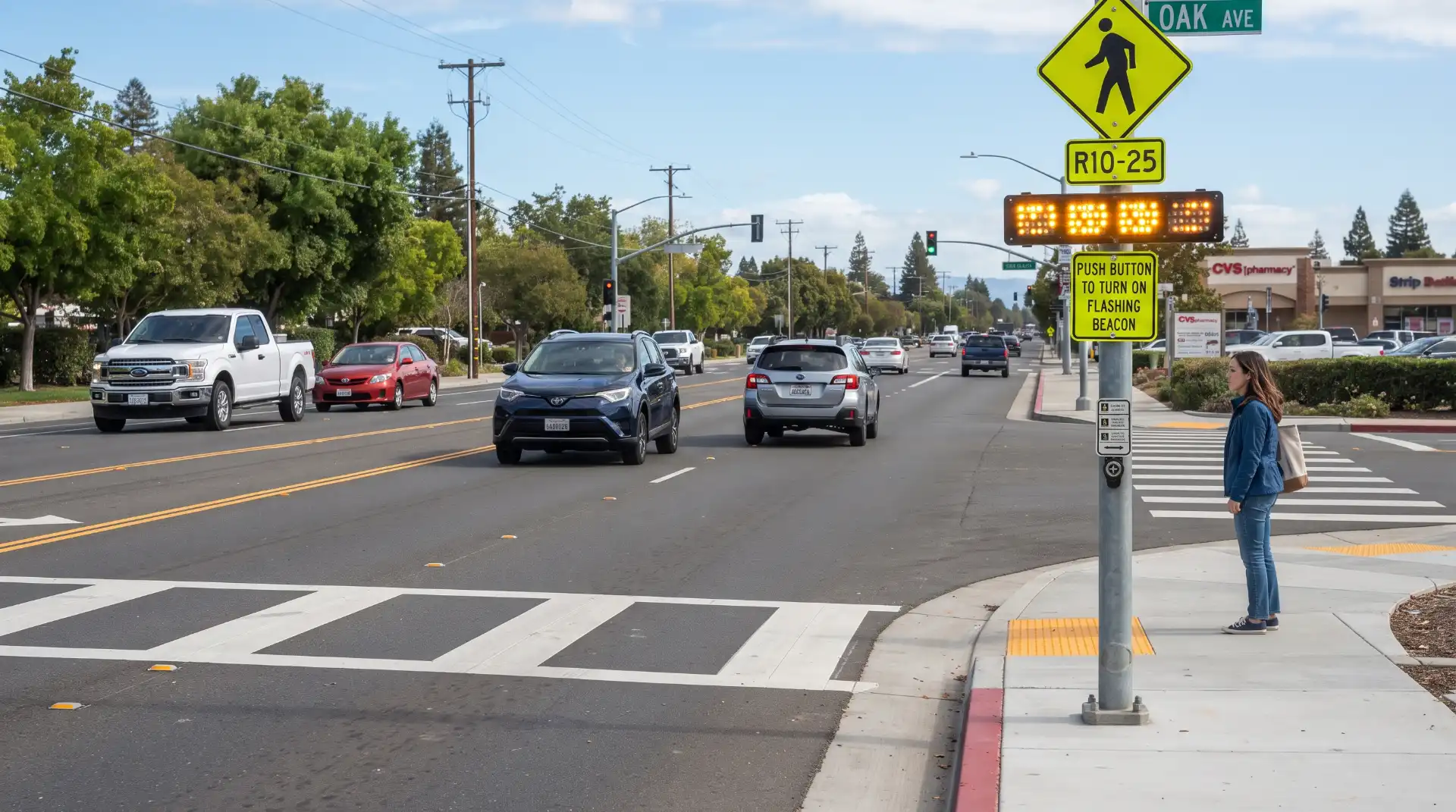
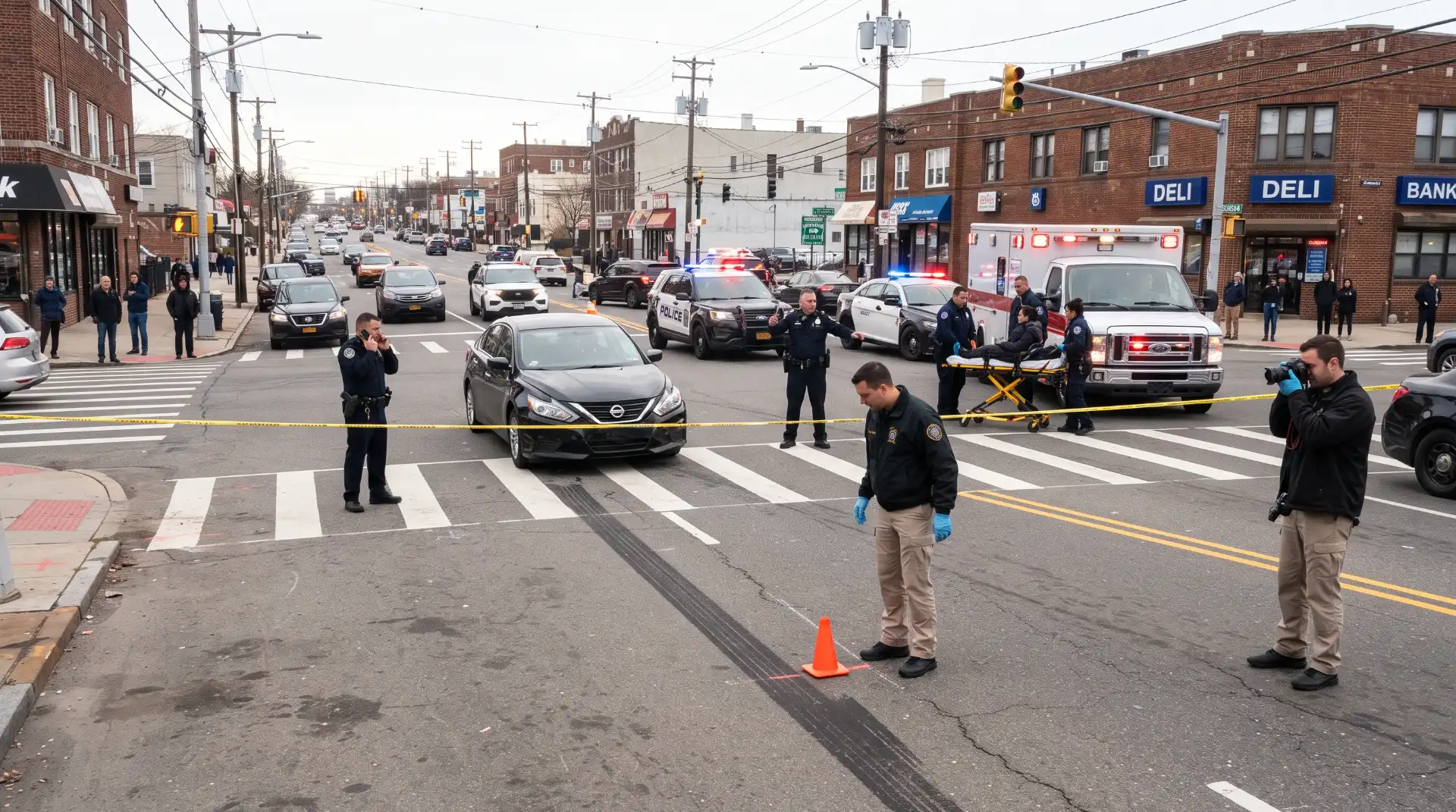
Crosswalks are designed to provide pedestrians with a designated location to cross a roadway.
However, a marked crosswalk cannot physically stop an approaching vehicle.
A speeding driver may approach the crosswalk too quickly to stop when a pedestrian begins crossing.
This is especially dangerous when a driver fails to notice a pedestrian until the person is already in the vehicle’s path.
NHTSA recommends that drivers yield to pedestrians in crosswalks and stop far enough away to allow other drivers to see the crossing pedestrian. Drivers should also never pass another vehicle that has stopped at a crosswalk because the stopped vehicle may be blocking the driver’s view of someone crossing.
The legal right of way does not eliminate the physical dangers of a speeding vehicle.
A pedestrian can legally have the right of way and still suffer catastrophic injuries if a driver fails to yield.
Speeding at Intersections Creates Multiple Risks
Intersections are among the most complicated locations on American roads.
Drivers may be turning left or right, changing lanes, watching traffic signals, looking for other vehicles, and navigating pedestrians simultaneously.
Speeding makes this environment even more challenging.
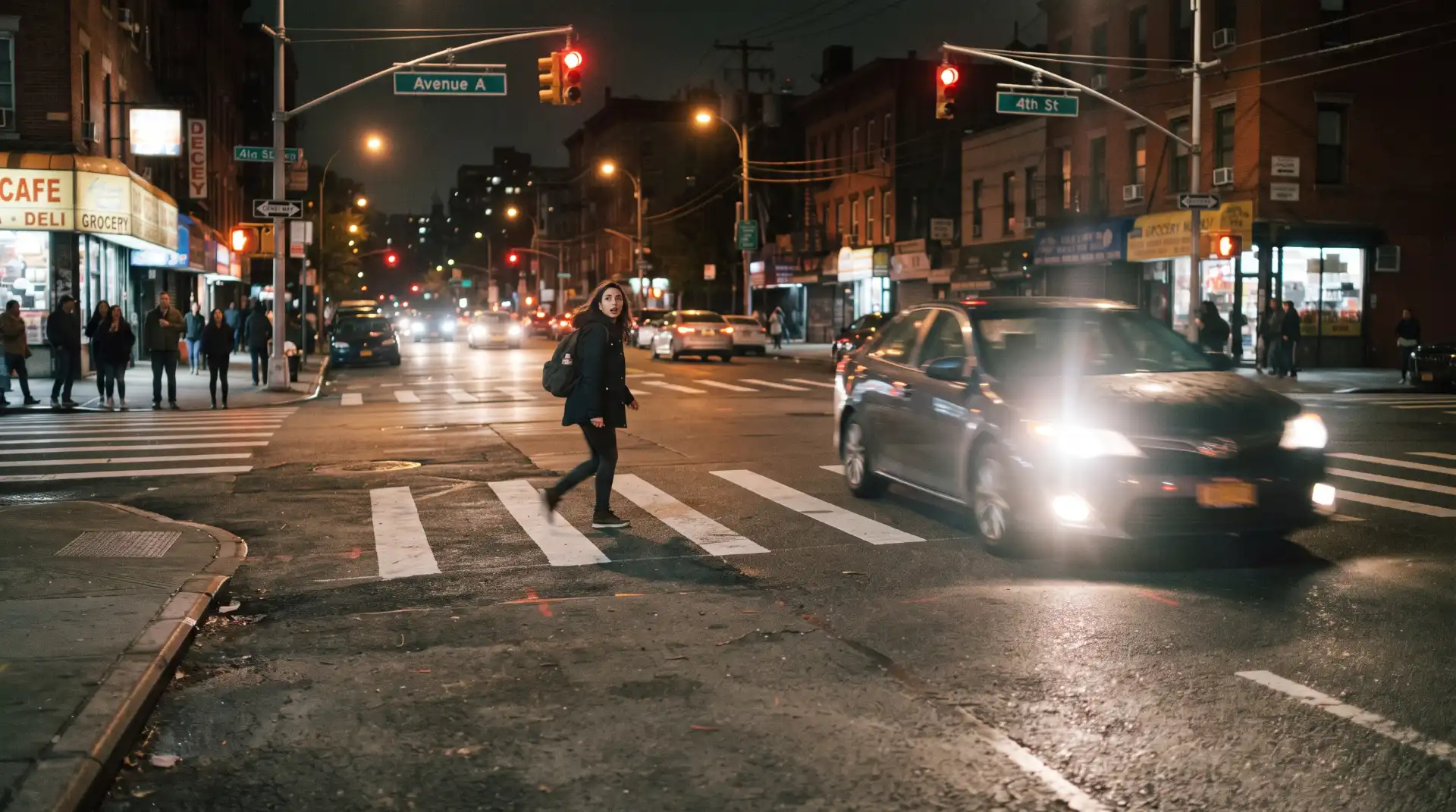
A driver traveling too fast may enter an intersection before recognizing a pedestrian.
The problem can become particularly serious when drivers make right turns across pedestrian crossings.
A driver focused on traffic approaching from another direction may fail to notice a person already crossing the road.
A speeding driver has less time to correct that mistake.
Residential Neighborhoods Are Not Freeways
Some drivers associate speeding primarily with highways.
However, excessive speed can be especially dangerous on neighborhood streets.
Residential areas contain driveways, sidewalks, parked vehicles, children, cyclists, pets, intersections, and pedestrians.
A child may run into the street.
A pedestrian may step out from between parked vehicles.
Someone may be walking a dog near the curb.
A driver traveling too fast may have only seconds to respond.
NHTSA notes that speeding is a problem on all types of roads and emphasizes that drivers should follow speed limits, particularly around people on the street, in school zones, and in neighborhoods where children are present.
School Zones Require Extra Caution
School areas present a unique pedestrian safety challenge.
Children may cross streets in groups, walk between parked vehicles, wait for buses, or move unpredictably near school entrances.
Drivers traveling through school zones should slow down and remain prepared to stop.
Even a brief increase in speed can reduce the time available to respond to a child entering the roadway.
The potential consequences are particularly serious because children are physically vulnerable and may have difficulty accurately judging the speed and distance of approaching vehicles.
School-zone speed restrictions are therefore intended to provide drivers with more time to react and reduce the severity of potential crashes.
Nighttime Speeding and Pedestrian Accidents
Visibility is another major factor.
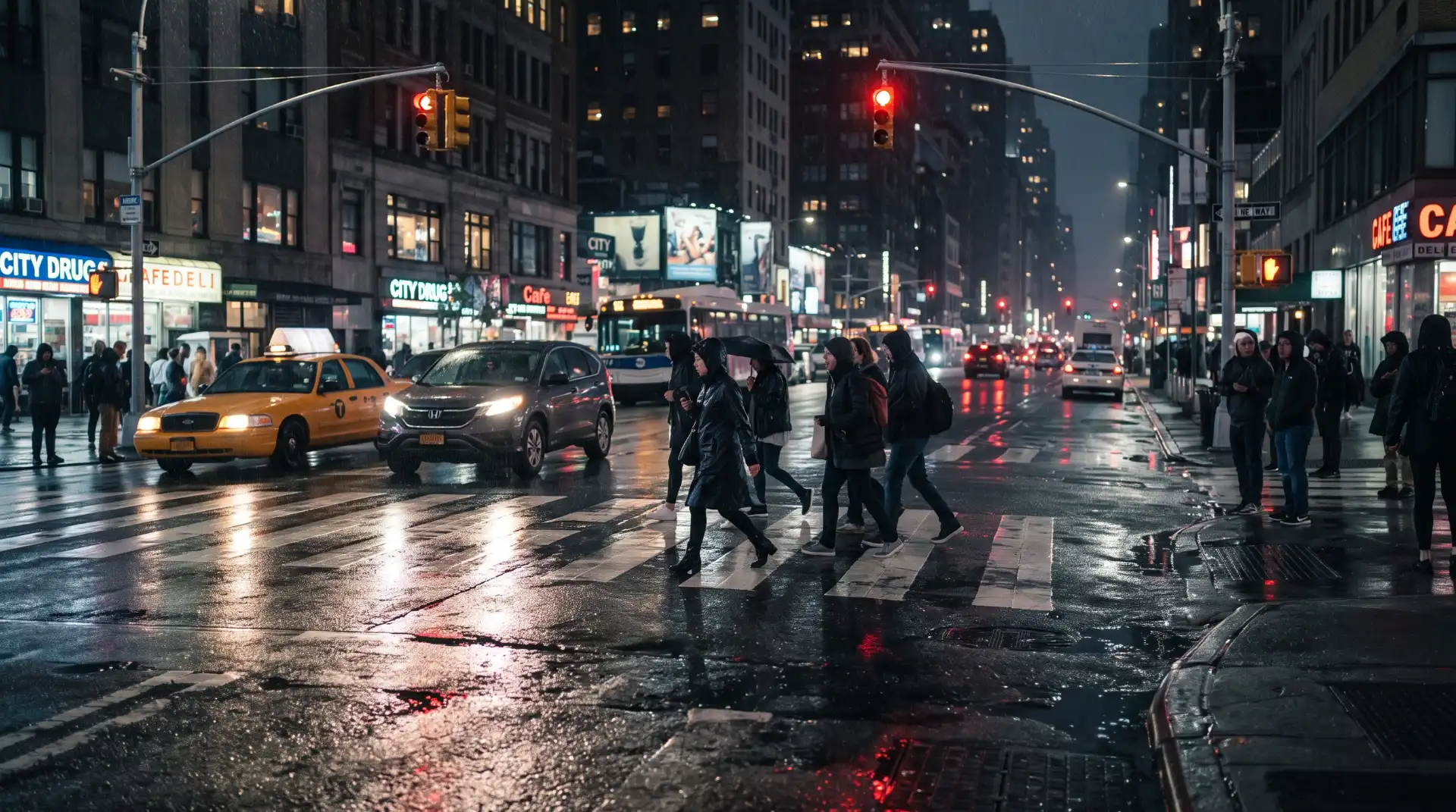
Pedestrians are harder to see at night, especially on roads with poor lighting.
Dark clothing, glare from headlights, rain, parked vehicles, and shadows can all make pedestrians more difficult to detect.
Speeding compounds these visibility problems.
If a driver needs additional time to identify a pedestrian, traveling faster leaves less time to respond once that pedestrian becomes visible.
NHTSA reports that darkness is strongly associated with pedestrian fatalities. Its pedestrian safety research has found that most pedestrian fatalities occur in dark conditions.
This does not mean pedestrians should avoid walking after dark.
Instead, it demonstrates why drivers should reduce speed and exercise additional caution when visibility is limited.
Weather Can Make Speeding Even More Dangerous
A driver who speeds during poor weather can create additional hazards.
Rain can reduce traction and visibility.
Fog can limit how far ahead a driver can see.
Snow and ice can dramatically increase braking distance.
Strong winds can affect vehicle stability.
Flooded roadways can create additional hazards.
A driver traveling at a speed that might be manageable in perfect conditions may be traveling dangerously fast during poor conditions.
NHTSA specifically warns that speeding includes traveling too fast for roadway conditions, even when the driver is not exceeding the posted speed limit.
For pedestrians, these conditions can make an already dangerous situation even more unpredictable.
Large Vehicles and Speed Can Compound the Risk
The size and design of a vehicle can also influence pedestrian injury outcomes.
American roads contain large numbers of SUVs, pickup trucks, crossovers, and vans.
NHTSA has highlighted concerns about pedestrian protection and vehicle design. In 2024, the agency proposed a new federal vehicle safety standard intended to reduce the risk of serious-to-fatal pedestrian injuries involving new passenger vehicles.
When a larger vehicle is traveling at excessive speed, the combination of vehicle size, mass, speed, and impact forces can create a particularly dangerous situation.
This is one reason drivers of SUVs and pickup trucks should be especially attentive in pedestrian-heavy environments.
Speeding Often Occurs Alongside Other Dangerous Driving Behaviors
Pedestrian crashes are rarely about only one factor.
A speeding driver may also be distracted.
A driver may be looking at a phone, adjusting navigation, eating, talking with passengers, or otherwise failing to pay attention.
Speeding can also occur alongside impaired driving.
An impaired driver may have slower reactions and poor judgment, while excessive speed further reduces the time available to respond.
Fatigue can create another combination of risks.
A tired driver may already have reduced alertness. Traveling too fast leaves even less time to recognize a pedestrian hazard.
These behaviors can interact and make a crash more likely or more severe.
What Happens When a Pedestrian Is Seriously Injured?
A serious pedestrian accident can affect nearly every part of an injured person’s life.
The initial emergency treatment may be only the beginning.
Someone who suffers a broken leg may need surgery followed by weeks or months of physical therapy.
Someone with a traumatic brain injury may require neurological treatment and ongoing rehabilitation.
A person with a spinal cord injury may need long-term medical care, home modifications, mobility equipment, and assistance with daily activities.
The financial consequences can be significant.
Medical bills can include emergency transportation, hospital stays, surgery, diagnostic imaging, medication, rehabilitation, specialist appointments, and future treatment.
An injured person may also miss work.
If the injury prevents someone from returning to their previous occupation, the financial consequences may extend far beyond the initial medical bills.
Evidence Can Be Important in a Speeding-Related Pedestrian Accident
When speeding is suspected, evidence may become particularly important.
The evidence available will depend on the individual accident, but it may include traffic-camera footage, nearby business surveillance, doorbell-camera recordings, witness statements, photographs, police reports, vehicle data, roadway markings, skid marks, and accident reconstruction analysis.
In some cases, an accident reconstruction professional may examine physical evidence to determine how the collision occurred.
This can include analyzing vehicle damage, roadway evidence, braking, vehicle movement, visibility, and other factors.
Witnesses can also provide important information.
A witness may have seen the vehicle before the collision, observed whether the driver appeared to be speeding, or seen what happened immediately afterward.
Because video recordings may be automatically deleted and physical evidence can change, preserving relevant evidence promptly can be important.
What Should You Do After Being Hit by a Vehicle?
The first priority after a pedestrian collision is medical care.
Call 911 or obtain emergency medical assistance when appropriate.
Even when an injury initially appears minor, medical professionals can evaluate for conditions that may not be immediately obvious.
If it is safe and physically possible, photographs of the accident scene may also be useful.
These can include images of the crosswalk, traffic signals, road signs, vehicle positions, roadway conditions, lighting, skid marks, and surrounding environment.
Do not put yourself in additional danger to collect photographs.
Information from witnesses can also be valuable.
If witnesses are willing to provide contact information, preserving that information may help later.
Keep copies of medical records, bills, prescriptions, rehabilitation records, employment documentation, and other materials associated with the accident.
You can also learn more about injury types and recovery in our related article, Common Injuries in Pedestrian Accidents and How to Recover.
Can Speeding Affect a Pedestrian Accident Claim?
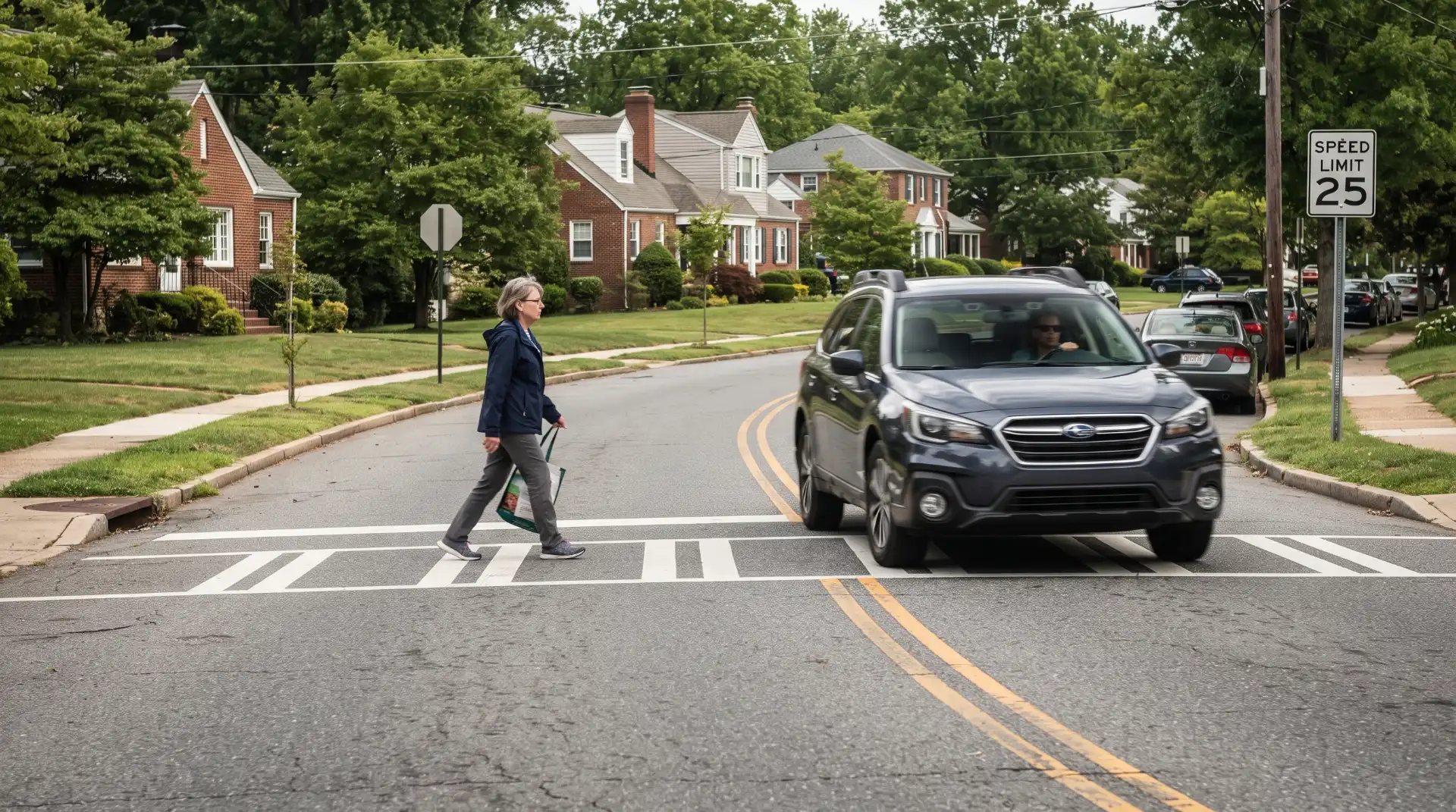
Speeding may be relevant to determining whether a driver acted negligently, but the legal effect depends on the circumstances and the law of the state where the crash occurred.
A pedestrian injury case may involve questions about whether the driver had a duty to act reasonably, whether that duty was breached, whether the driver’s conduct caused the collision, and what damages resulted.
Evidence of speeding can potentially help establish what happened before the crash.
However, every pedestrian accident is different.
Questions involving right of way, traffic signals, crosswalks, visibility, road design, weather, pedestrian behavior, driver behavior, vehicle condition, and other factors may also matter.
Some states apply comparative-fault rules that can affect the amount an injured person may recover if the evidence shows that multiple parties contributed to the accident.
Because state laws differ, an injured pedestrian should not assume that another driver’s speeding automatically determines the legal outcome.
An attorney can evaluate the facts and explain how the applicable state law may affect a particular claim.
Why Medical Documentation Matters
After a serious pedestrian collision, medical documentation can serve two important purposes.
First, it helps doctors understand the person’s condition and develop an appropriate treatment plan.
Second, it creates a record of the injuries and treatment associated with the crash.
Medical documentation can include emergency-room records, diagnostic scans, surgical reports, physician notes, physical therapy records, prescriptions, and follow-up appointments.
Consistent medical treatment can also help identify injuries that become more apparent over time.
Some symptoms may not fully develop immediately after a traumatic event.
For example, a person may initially focus on obvious cuts or broken bones while overlooking headaches, dizziness, memory problems, back pain, or other symptoms.
Anyone involved in a serious pedestrian collision should follow the medical advice they receive and report concerning symptoms to a healthcare professional.
The Financial Impact of a Serious Pedestrian Injury
The cost of a pedestrian accident can extend far beyond the initial emergency-room bill.
A seriously injured pedestrian may face hospital expenses, surgery, medication, physical therapy, rehabilitation, transportation costs, assistive equipment, and future medical treatment.
There may also be non-medical financial consequences.
If the injured person cannot work, they may lose wages.
If the injury prevents a return to the person’s previous career, future earning capacity may also become an issue.
Family members may have to take time away from work to provide transportation or assistance.
A permanent disability can also require changes to the person’s home or vehicle.
These issues demonstrate why it is important to look beyond the immediate medical bill when evaluating the consequences of a serious pedestrian accident.
How Drivers Can Help Prevent Speed-Related Pedestrian Crashes
The simplest way drivers can reduce the risk of serious pedestrian crashes is to slow down.
Following posted speed limits provides more time to react and generally reduces the energy involved in a collision.
Drivers should also adjust speed for conditions.
A lower speed may be appropriate around pedestrians, in residential areas, near schools, at busy intersections, during bad weather, and on poorly lit roads.
NHTSA recommends slowing down, watching for pedestrians, yielding at crosswalks, avoiding passing vehicles stopped at crosswalks, and exercising additional caution at night and in bad weather.
Drivers should also eliminate distractions.
A driver who is looking at a phone may not see a pedestrian until it is too late.
The combination of distraction and speed can be particularly dangerous because the driver may lose several seconds of valuable reaction time.
How Communities Can Reduce Pedestrian Injuries
Preventing pedestrian deaths cannot depend entirely on individual behavior.
Roadway design also matters.
Communities can use measures intended to slow vehicles and make pedestrians more visible.
These can include improved lighting, sidewalks, pedestrian islands, curb extensions, raised crossings, traffic-calming features, better crosswalk markings, pedestrian signals, and appropriate speed limits.
NHTSA’s Safe System approach recognizes that humans make mistakes and that transportation systems should be designed so that mistakes are less likely to result in death or serious injury.
The goal is therefore not simply to eliminate every mistake.
Instead, the goal is to reduce the likelihood that a mistake produces catastrophic consequences.
Lower vehicle speeds are an important part of that approach.
Why Speed Management Matters for the Future of Pedestrian Safety
The United States continues to face significant challenges involving pedestrian safety.
Although national traffic safety trends can change from year to year, pedestrian deaths and injuries remain a serious concern.
NHTSA’s 2024 data shows the scale of the problem, with thousands of pedestrians killed and tens of thousands injured in traffic crashes.
At the same time, speeding remains a major contributor to roadway fatalities.
NHTSA reported 11,288 speeding-related traffic deaths in 2024, representing 29% of all traffic fatalities.
These statistics reinforce a basic principle of road safety: speed matters.
Reducing vehicle speed can provide drivers with more time to identify pedestrians, give vehicles more opportunity to stop, and reduce the forces involved if a collision occurs.
Frequently Asked Questions About Speeding and Pedestrian Injuries
Does speeding make pedestrian accidents more dangerous?
Yes. Higher vehicle speeds can reduce driver reaction time, increase stopping distance, and increase the forces involved in a collision. NHTSA states that higher impact speeds are associated with greater pedestrian injury and fatality risks.
Can a driver be considered speeding without exceeding the posted speed limit?
Potentially. Driving too fast for conditions can be unsafe even when the vehicle is traveling at or below the posted limit. Weather, visibility, roadway conditions, construction, traffic, and pedestrian activity can all affect what constitutes a safe speed.
Are pedestrians safer in crosswalks?
Crosswalks provide designated crossing locations and can improve pedestrian safety, but they cannot prevent every collision. Drivers still need to slow down, watch for pedestrians, and yield when required.
What injuries can a pedestrian suffer after a speeding crash?
Potential injuries include traumatic brain injuries, spinal injuries, fractures, internal injuries, soft-tissue damage, permanent disabilities, and fatal injuries. The severity depends on numerous factors, including impact speed, vehicle characteristics, point of impact, and the pedestrian’s position.
Can speeding be evidence in a pedestrian accident claim?
It can potentially be relevant evidence. The legal significance depends on the facts of the collision and the law of the state where the accident occurred.
What should I do if I am seriously injured after being hit by a speeding driver?
Seek medical attention, report the crash when appropriate, preserve available evidence, keep records related to your injuries and expenses, and consider consulting a qualified pedestrian accident attorney about your legal rights.