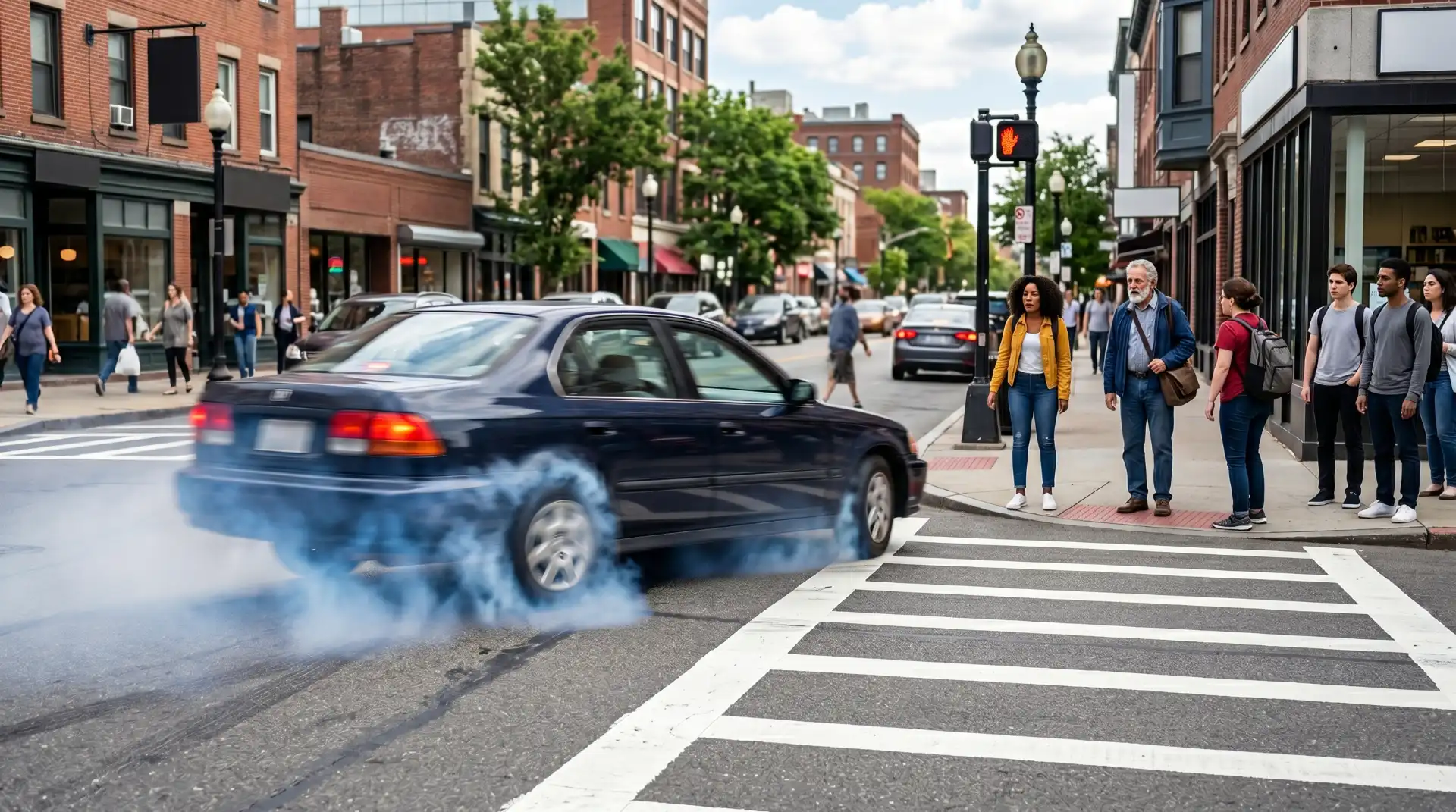
Hit‑and‑run incidents involving pedestrians remain a serious traffic safety problem in the United States. In recent years, data show a concerning trend: about one in four pedestrian fatalities occurs in hit‑and‑run crashes. These crashes happen when a driver strikes a pedestrian and leaves the scene without stopping to identify themselves, provide assistance, or exchange information as required under the law.
According to national crash data, pedestrian deaths and injuries have been increasing dramatically compared to other kinds of traffic incidents. Between 2009 and 2023, pedestrian fatalities rose 80%, while overall traffic deaths climbed just 13%. Victims of hit‑and‑run accidents often face not only physical harm but also emotional trauma, financial burdens, and complex legal hurdles in proving their case.
This article explains why these crashes happen, what rights victims have, how hit‑and‑run laws work in different states, and the legal strategies available to help injured pedestrians recover compensation.
Why Hit‑and‑Run Pedestrian Accidents Are So Serious
A hit‑and‑run crash is a collision where a motorist leaves the scene without completing their legal duties. Every U.S. state has specific laws governing hit‑and‑run conduct, but most share the same basic principles: if a collision causes injury, death, or damage, the driver must stop, provide identification, and offer reasonable assistance. Leaving the scene in these situations is typically a criminal offense.
Hit‑and‑runs are especially dangerous for pedestrians for several reasons:
- Vulnerable Road Users
Pedestrians lack the protection of a vehicle. Even at low speeds, being struck by a car can lead to serious injuries like traumatic brain injury, fractures, spinal injuries, and internal bleeding. The risk of fatality is significantly higher when the motorist does not stop and provide help immediately. - Lack of Immediate Assistance
When a driver fails to stop, injured pedestrians may not receive timely medical care. Quick treatment in the minutes following a crash can be critical in reducing long‑term disability and improving outcomes. - Evidence Challenges
Without video footage, witness statements, or vehicle information, tracking down the negligent driver becomes challenging. Often, investigators must reconstruct the accident from limited clues, making liability and compensation tougher to prove without legal help. - Rising Statistics
National reports show hit‑and‑run involvement in pedestrian deaths has climbed over the last decade, with about 25% of pedestrian fatalities connected to hit‑and‑run crashes in recent years.
What to Do Immediately After a Hit‑and‑Run Pedestrian Crash
If you are struck by a vehicle that leaves the scene, your immediate actions can significantly impact your safety and your legal case:
Prioritize Safety and Medical Care
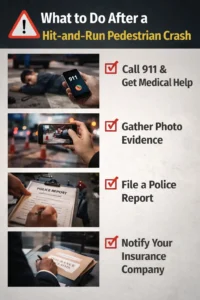
Your health comes first. Even if you think your injuries are minor, call 911 immediately. Some injuries may not be obvious at first due to adrenaline, and a medical assessment protects both your health and your legal claim.
Gather Information at the Scene
If you are physically able, try to collect as much information as possible:
- Look for any fragments of the vehicle involved, such as broken headlights or paint markings.
- Ask witnesses for their contact information.
- Take photos of the accident scene, tire marks, road conditions, and surrounding intersections.
Preserve Evidence
Preserve any items damaged in the crash. Clothing, shoes, and personal belongings may contain physical evidence that supports your claim.
Get a Police Report
Even if the driver fled the scene, you should report the incident to law enforcement as soon as possible. The official police report becomes key evidence when pursuing insurance claims or legal action.
Notify Your Insurance Company
Your own insurance may provide coverage if the at‑fault driver cannot be found, especially if you have uninsured motorist coverage.
Seek Legal Help Early
A personal injury attorney experienced with pedestrian hit‑and‑run cases can help you navigate complex legal issues, including gathering evidence, negotiating with insurance, and filing claims.
Hit‑and‑Run Laws in the United States
In the U.S., hit‑and‑run laws vary by state, but the core requirement is consistent: if a crash results in injury, death, or property damage, the driver must stop and provide information. Leaving the scene without doing so is typically a misdemeanor or felony, depending on the severity of the incident.
Criminal Consequences
Most states impose criminal charges for hit‑and‑run crashes:
- Misdemeanor offenses may result in fines, license suspension, or jail time.
- Felony charges apply when someone is injured or killed, often leading to longer prison sentences and higher fines.
For example, in Texas, a hit‑and‑run that results in serious injury is a third‑degree felony punishable by years in prison, whereas lesser damage may be a misdemeanor with fines and shorter jail terms.
Duty to Aid
Along with stopping and identifying themselves, many states require drivers to render reasonable assistance, such as calling emergency services, if someone is injured. Failing to do so further compounds legal liability.
Civil Liability
Even if criminal charges are not pursued, drivers who flee the scene may face civil lawsuits from injured victims seeking compensation for:
- Medical expenses
- Lost income
- Pain and suffering
- Rehabilitation and future care costs
- Property damage
Common Legal Strategies for Hit‑and‑Run Pedestrian Victims
Navigating a hit‑and‑run injury claim requires careful legal planning. Here are key strategies that experienced attorneys often use:
Identify the Negligent Driver
When possible, your attorney will work with accident reconstruction experts and investigators to track down the at‑fault driver. This may involve:
- Reviewing traffic and surveillance cameras near the scene
- Interviewing witnesses
- Obtaining license plate evidence from broken vehicle parts
If the driver is eventually found, they can be held criminally and civilly liable.
Use Your Own Insurance
If the driver remains unidentified, your attorney can help you pursue compensation through your own insurance policy, including:
- Uninsured motorist coverage
- Personal injury protection (PIP), where available
Uninsured motorist coverage often applies when the at‑fault party is not identified or does not have insurance.
File a Personal Injury Lawsuit
Whether the driver is found or not, a civil lawsuit may be filed against:
- The at‑fault driver (if identified)
- Your insurance carrier (in certain coverage disputes)
This lawsuit seeks monetary compensation for all losses, including future medical care.
Wrongful Death Claims
If a pedestrian dies from their injuries, surviving family members may file a wrongful death claim to recover damages related to loss of financial support, funeral costs, and emotional suffering.
Negotiate with Insurance
Insurance companies often attempt to minimize payouts. A skilled attorney negotiates on your behalf to maximize your settlement based on the full extent of your injuries and losses.

Pedestrian Rights After Hit‑and‑Run Crashes
Pedestrians injured in hit‑and‑run crashes have specific rights under both civil and insurance law.
Right to Medical Compensation
In addition to what your own insurance may cover, you may be entitled to compensation for:
- Current and future medical costs
- Physical therapy
- Permanent disability compensation
Right to Seek Pain and Suffering Damages
In many states, injured victims can claim pain and suffering, including emotional distress and decreased quality of life.
Right to Legal Representation
You have the right to hire an experienced attorney to protect your legal interests and pursue justice in both insurance claims and court.
Preventing Hit‑and‑Run Pedestrian Accidents
Understanding the factors behind hit‑and‑run crashes can help promote safety. Data show hit‑and‑run not only causes a significant share of pedestrian fatalities, but these incidents often occur in conditions such as:
- Poor lighting
- High‑traffic areas
- Non‑intersection locations where pedestrians cross multiple lanes
Community efforts, safer road designs, and strict enforcement of hit‑and‑run laws are critical to reducing these tragedies.
For authoritative pedestrian safety information, you can visit the National Highway Traffic Safety Administration’s (NHTSA) pedestrian safety page. Pedestrian Safety at NHTSA
Conclusion
Hit‑and‑run pedestrian accidents represent one of the most serious challenges in U.S. traffic safety today. With a substantial percentage of pedestrian deaths linked to drivers who flee the scene, victims face both physical harm and legal complexity. Understanding your rights, acting quickly after a crash, and seeking professional legal support are crucial steps toward justice and compensation.
If you or a loved one has been injured in a hit‑and‑run pedestrian accident, a skilled personal injury attorney can help you build a strong case, navigate complicated insurance issues, and pursue the full compensation you deserve.